Price:
13500 €
Add to cart
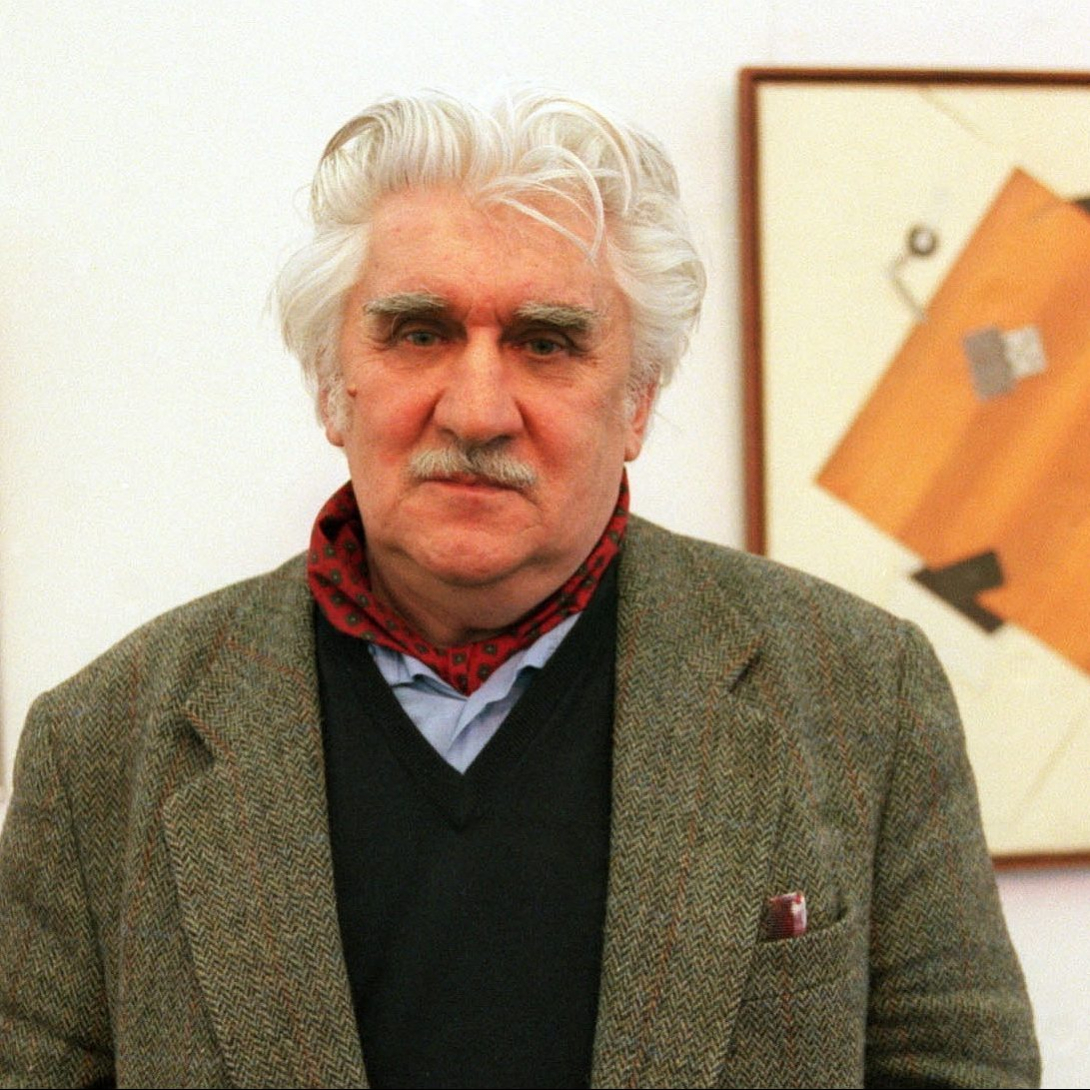

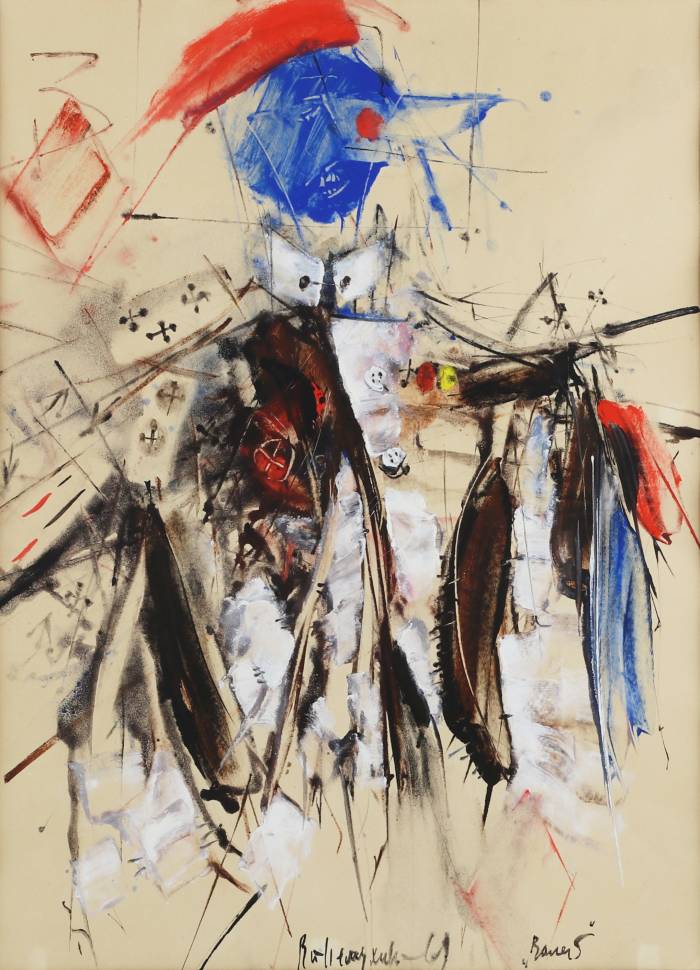
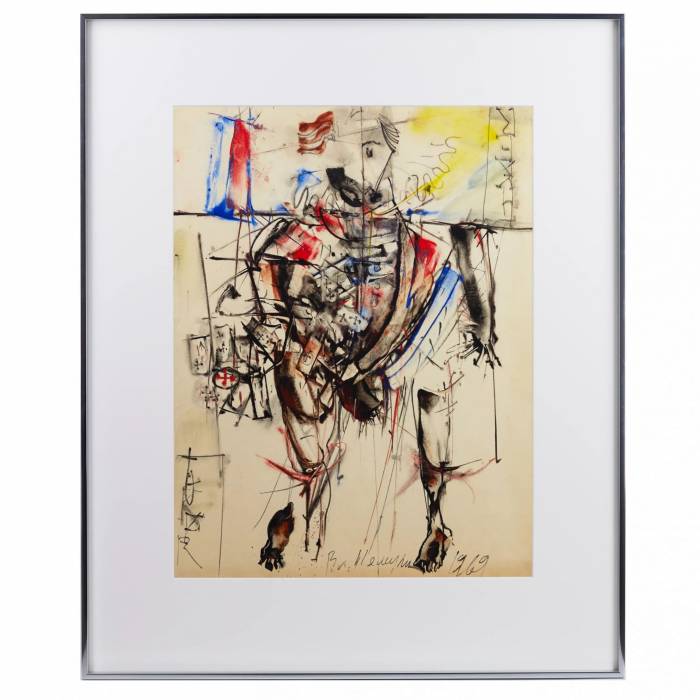
Vladimir Nemukhin was a Russian artist of the Moscow Nonconformist movement, a key participant of the Lianozovo group and a leading figure of unofficial Soviet art. His work shaped the symbolic language of the post-war avant-garde and formed an essential part of artistic resistance to the ideological framework of Socialist Realism.
We will only share latest what our month on the VLADIMIR NEMUKHIN.
BIOGRAPHY
Vladimir Nikolaevich Nemukhin was born in 1925 in Moscow. He studied at the Moscow Regional Art College in memory of 1905 during the 1940s. From an early stage he developed outside the academic and official artistic system. By the late 1950s he had joined the circle of artists working beyond state ideological control. He died in 2016 in Moscow.
CAREER MILESTONES
From the late 1950s Nemukhin became associated with the Lianozovo group formed around Evgeny Kropivnitsky and Oskar Rabin. During the 1960s he participated in unofficial exhibitions that shaped Moscow’s alternative artistic environment. In 1974 he was connected with the events known as the Bulldozer Exhibition. From the mid-1970s his works began to be exhibited internationally. In the 1990s he received institutional recognition, with solo exhibitions held in Russia and across Europe.
STYLE, TECHNIQUE AND ARTISTIC VISION
Nemukhin is regarded as one of the central figures of Moscow Nonconformism. His visual language is constructed upon a system of recurring symbols, most notably the motif of playing cards, suits and numerical combinations. The card is interpreted as a sign of fate, historical contingency and existential choice. He worked in painting, graphic art and assemblage, combining figurative elements with abstract compositional structures. His works are characterised by textured surfaces, contrasting colour schemes and the use of signs as a universal visual code. In art historical discourse Nemukhin is considered a key figure of the late Soviet avant-garde.
LEGACY AND MASTERPIECES
Among his significant bodies of work are the “Cards” series of the 1960s, compositions featuring card suits and large-scale assemblages of the 1970s. His works are held in the collections of the State Tretyakov Gallery, the State Russian Museum, as well as in European and American museum and private collections. His oeuvre forms part of the canon of unofficial Soviet art.