×
Create account and receive
15% DISCOUNT
your first acquisition
or
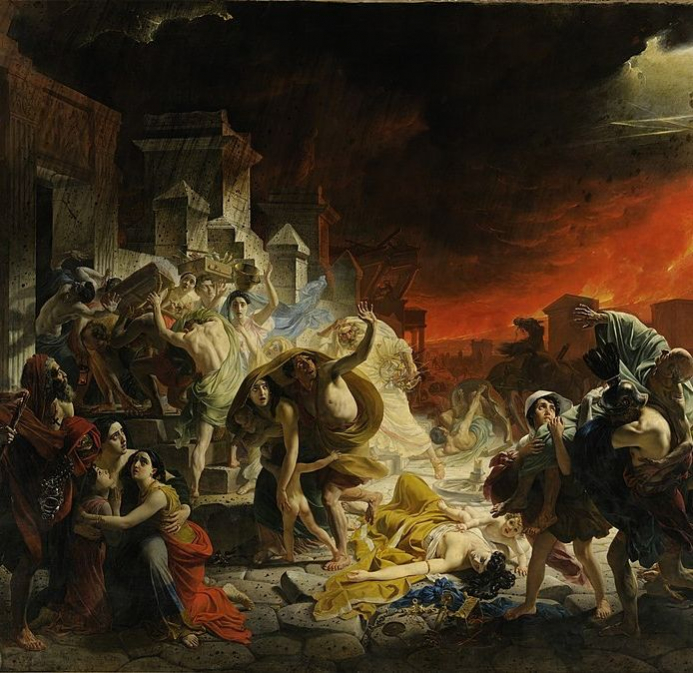
The style Romanticism is an artistic movement of the late eighteenth to the mid-nineteenth century, formed in Europe and further developed in Russia as a reaction against the rationalism of the Enlightenment and the normative principles of Classicism. Romanticism is characterized by the cult of individual experience, an interest in nature, history, and the irrational, and a стремление toward inner freedom, subjective perception, and national identity.
We will only share latest what our month on the ROMANTICISM.
ORIGIN AND DEVELOPMENT
Romanticism emerged in Europe amid the profound political and social transformations of the late eighteenth century, associated with the French Revolution, the Napoleonic Wars, and the crisis of the idea of universal reason. Its earliest theoretical and artistic forms developed in Germany and Great Britain, where Idealist philosophy, poetry, and landscape painting shaped a new artistic worldview. In the early nineteenth century, Romanticism spread widely across France, Spain, and Italy, acquiring distinct national characteristics.
In Russia, Romanticism formed at the turn of the eighteenth and nineteenth centuries in the context of the reforms of Alexander I, the Patriotic War of 1812, and the rise of national consciousness. Unlike Western Europe, Russian Romanticism did not oppose academic tradition but developed in close dialogue with it, coexisting with Classicism and forming a distinctive synthesis of emotional expressiveness and academic structural clarity.
ARTISTIC CHARACTERISTICS
Romanticism is marked by a departure from strict compositional norms in favor of dynamism, drama, and emotional intensity. Color assumes an independent expressive role, while light and atmospheric effects gain significance. Nature is interpreted as a living, symbolic force reflecting the inner states of the human spirit. Historical, mythological, and contemporary subjects are treated through the lens of personal experience, tragic conflict, and heroic pathos.
In the Russian tradition, these features are combined with heightened psychological depth, a focus on individual character, and the preservation of academic compositional principles, particularly in portraiture and historical painting.
MAJOR SCHOOLS AND DIRECTIONS
German Romanticism is oriented toward philosophical and metaphysical interpretations of nature and human existence.
French Romanticism is distinguished by expressive painterly techniques and a strong interest in contemporary historical and political events.
British Romanticism develops the landscape tradition, focusing on light, atmosphere, and the forces of nature.
Spanish Romanticism combines romantic imagery with social critique and national themes.
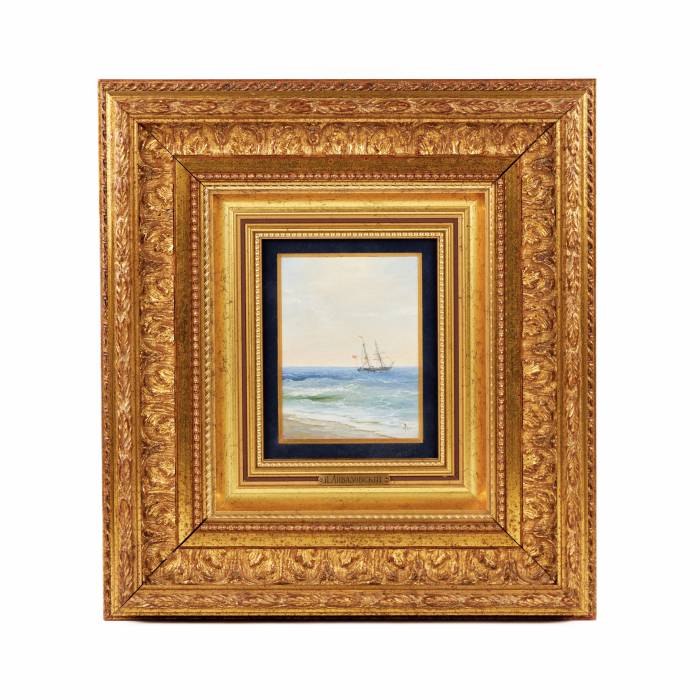
Russian Romanticism emerges as a synthesis of European ideas and academic training, emphasizing psychological portraiture, historical drama, and marine painting.
KEY ARTISTS AND WORKS
Romanticism established a pan-European artistic canon in which personal emotion, historical consciousness, and national specificity became central to the creative method.
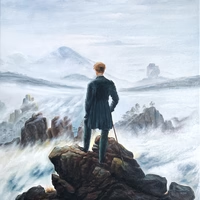
Caspar David Friedrich – Wanderer above the Sea of Fog (c. 1818);
Eugène Delacroix – Liberty Leading the People (1830);
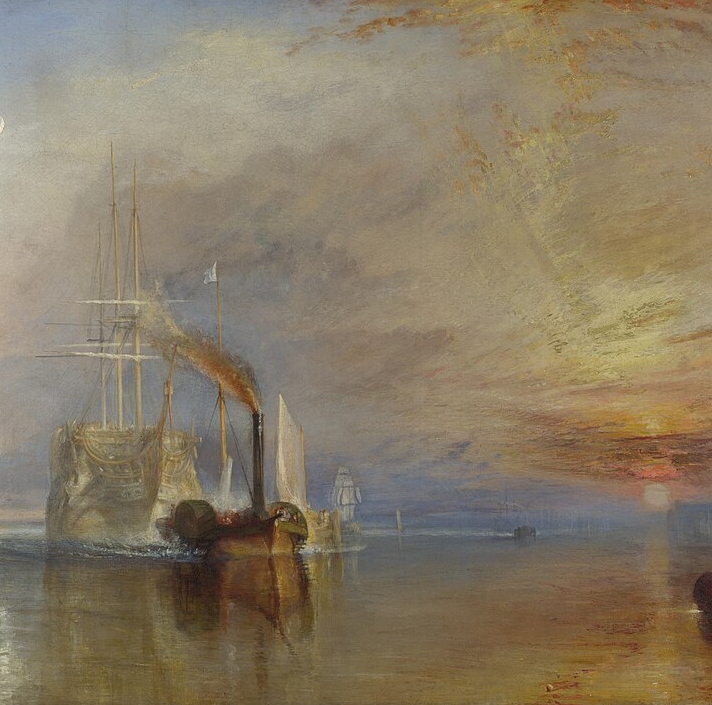
J. M. W. Turner – The Fighting Temeraire (1839);
Karl Bryullov – The Last Day of Pompeii (1833);
Ivan Aivazovsky – The Ninth Wave (1850).
INFLUENCE AND LEGACY
Romanticism had a decisive impact on the development of Realism, Symbolism, and later nineteenth-century art, laying the foundations for a subjective and expressive artistic language. In both Europe and Russia, it represents a key stage in the transition from classical value systems to the diversity of artistic forms of the modern era and continues to be regarded in museum and scholarly practice as a fundamental movement of nineteenth-century art.