Price:
12500 €
Add to cart

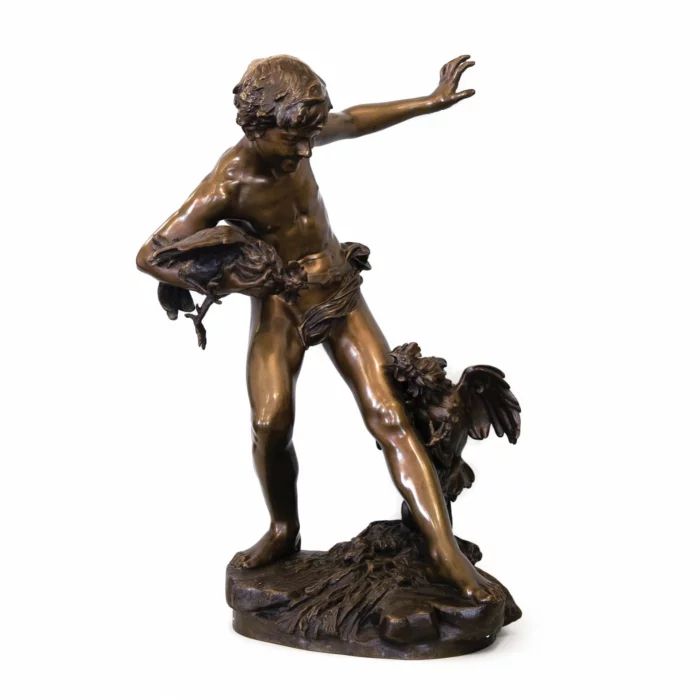
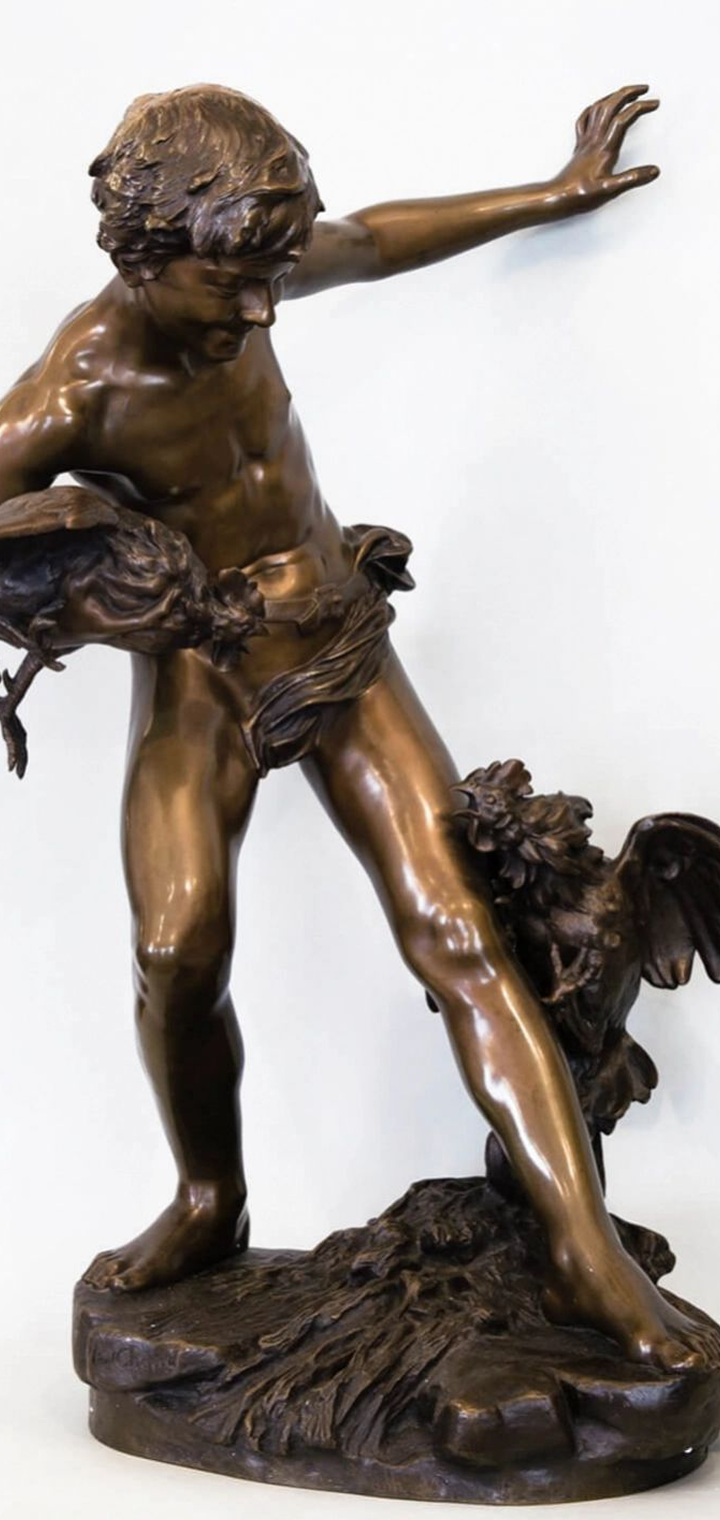
Paul Chevré was a French Academic sculptor active in France and Canada at the turn of the nineteenth and twentieth centuries. Author of major public monuments and official portrait busts, including the monument to Samuel de Champlain in Quebec. Gold medallist of the Paris Salon and representative of the official sculpture of the Third Republic.
We will only share latest what our month on the PAUL CHEVRÉ.
BIOGRAPHY
Paul Chevré was born on 5 July 1866 in Brussels into a family of sculptors. His father, also named Paul Chevré, worked in Rome and was connected to the artistic milieu. From an early age he trained within the Academic tradition under established masters.
He first exhibited at the Paris Salon in 1890. In 1891 and again in 1913 he was awarded gold medals at the Salon, securing his position among the recognised sculptors of the French Third Republic.
He died on 20 February 1914 in Asnières-sur-Seine after a severe illness.
CAREER MILESTONES
A decisive phase of his career was linked to Canada. In 1898, commissioned by the city of Quebec, Chevré created the monument to Samuel de Champlain, which became one of the key monuments of Canadian historical memory.
In the early twentieth century he executed numerous state and municipal commissions, including sculptural work connected with the reconstruction of the town hall in Asnières, as well as statues of prominent Canadian figures.
In 1912 he completed the bust of Sir Wilfrid Laurier for the Château Laurier Hotel in Ottawa. In April 1912 Chevré travelled to Canada aboard the RMS Titanic to attend the opening ceremony of the building. Following the disaster of 14-15 April, he was rescued in one of the first lifeboats. He spent his final years between France and Canada.
STYLE, TECHNIQUE AND ARTISTIC VISION
Chevré’s work developed within the framework of Academicism and official monumental sculpture of the late nineteenth century. His compositions are characterised by structural clarity, precise anatomical modelling and historically informed representation.
In monumental works he combined Academic tradition with the civic function of the public monument. His portrait busts demonstrate an interest in psychological characterisation while maintaining formal dignity.
He worked primarily in bronze and stone, materials suited to urban memorial sculpture.
LEGACY AND MASTERPIECES
Monument to Samuel de Champlain, Quebec, 1898 - a major example of Franco-Canadian monumental sculpture at the turn of the century.
Bust of Wilfrid Laurier, Ottawa, 1912 - representative of official state portrait sculpture.
His works remain in public spaces in Quebec and Ottawa and in municipal collections in France and Canada.