Price:
10000 €
Add to cart
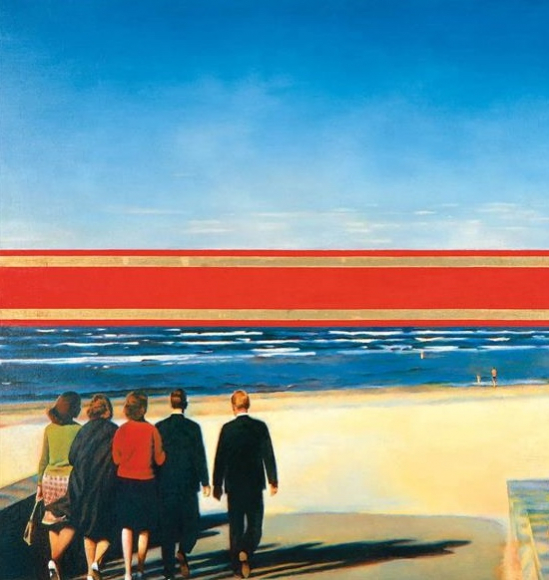
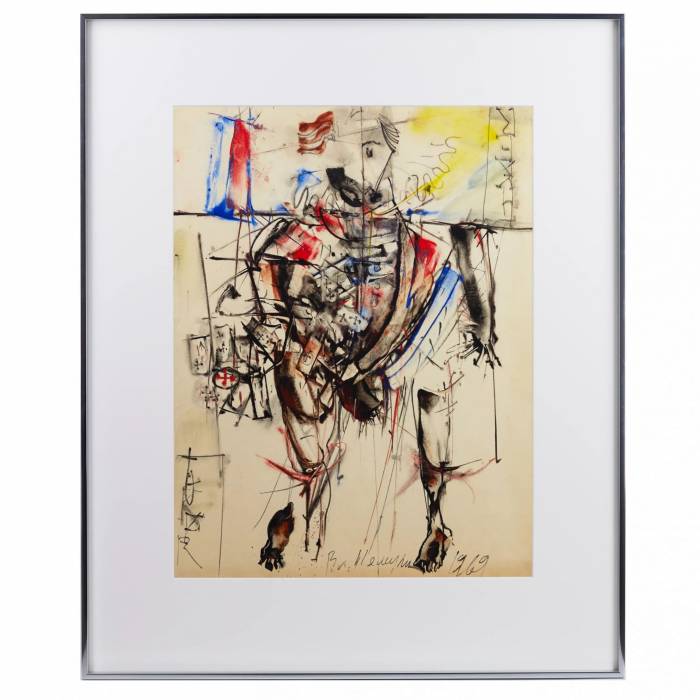
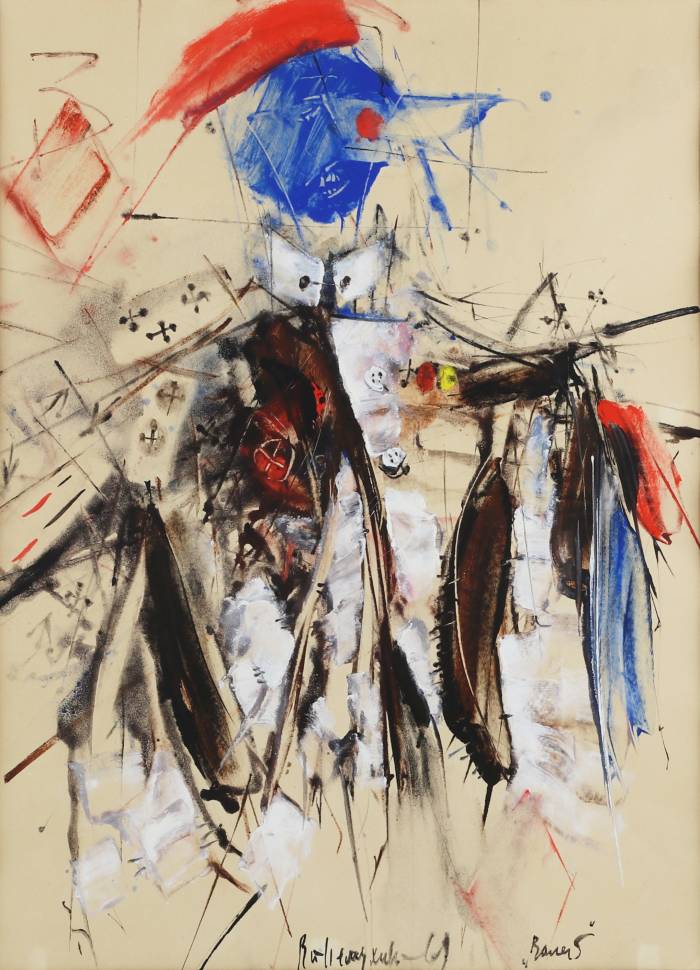

Nonconformism - an artistic movement of the second half of the twentieth century that emerged in the USSR in the 1950s–1980s as an alternative to Socialist Realism. It developed primarily in Moscow and Leningrad and was grounded in principles of artistic autonomy, inner freedom, and dialogue with international Modernism, reflecting a philosophy of cultural resistance and individual creative position.
We will only share latest what our month on the NONCONFORMISM.
ORIGINS AND DEVELOPMENT
Nonconformism arose in the post-war Soviet Union under conditions of strict ideological control over artistic production. After Socialist Realism was established in the 1930s as the only officially sanctioned method, alternative artistic practices were forced into the private sphere. During the 1950s–1960s, amid partial cultural liberalization, a circle of artists oriented toward the traditions of early twentieth-century Modernism, the historical avant-garde, and Western contemporary art began to take shape. Moscow and Leningrad became key centres where informal groups, studio communities, and independent exhibition initiatives emerged. A defining moment was the so-called Bulldozer Exhibition of 1974, which publicly exposed the conflict between unofficial art and the state system. By the 1980s, Nonconformism had developed a stable artistic milieu with its own hierarchy of artists, collectors, and international contacts.
ARTISTIC CHARACTERISTICS
Nonconformism did not constitute a unified stylistic canon but encompassed a wide spectrum of approaches - from abstraction and Expressionism to Conceptual art and symbolically charged figurative language. Compositions often relied on free plasticity, spatial ambiguity, and subjective interpretation of form. The colour palette ranged from restrained monochrome to intense contrasts. Texture, materiality, and experimentation with unconventional media played a central role. Symbolism frequently acquired an existential dimension, addressing themes of memory, time, spiritual inquiry, and personal experience. Philosophically, the movement affirmed artistic freedom and rejected ideologically prescribed narratives.
MAJOR SCHOOLS AND TENDENCIES
Lianozovo School
Moscow Conceptualism
Leningrad Underground
Sots-Art
Unofficial Abstraction
KEY ARTISTS AND WORKS
Nonconformism produced a circle of artists who defined the visual and intellectual language of unofficial Soviet art. Their works established the autonomy of artistic expression and formed the canon of an alternative cultural tradition in the second half of the twentieth century.
ILYA KABAKOV – The Man Who Flew into Space from His Apartment (1985);
ERIK BULATOV – Horizon (1971–1972);
VLADIMIR NEMUKHIN – Cards (1960s);
OSKAR RABIN – Russian Village (1960s);
KOMAR AND MELAMID – Our Goals Are Clear (1972).
INFLUENCE AND LEGACY
Nonconformism played a decisive role in shaping the post-Soviet artistic landscape and in integrating Russian art into the international context. It contributed to the development of Conceptualism, installation art, and critical artistic practices of the late twentieth century. Works by its representatives are held in major museum collections worldwide, including MoMA, Centre Pompidou, and Tate. In contemporary scholarship and curatorial discourse, Nonconformism is regarded as a key phenomenon of Soviet cultural history and an important chapter in the global development of late Modernism.