×
Create account and receive
15% DISCOUNT
your first acquisition
or
Jacob Petit was a Parisian porcelain manufactory of the mid-nineteenth century founded by Claude-Jean Petit. Its production was distinguished by vivid decorative treatment, complex forms and the use of Neorococo and Oriental stylistic motifs. The factory played a significant role in the development of French artistic porcelain during the period of the Second Empire.
We will only share latest what our month on the JACOB PETIT.
HISTORY AND DEVELOPMENT
The Jacob Petit manufactory was established in Paris around 1838 by Claude-Jean Petit, who operated under the commercial name Jacob Petit. The enterprise emerged during the expansion of French decorative production under Louis-Philippe and the early Second Empire. Based in Paris, the factory developed models intended both for domestic distribution and for export markets. A substantial portion of its output was adapted for international clients, particularly in Britain, Germany and the United States, where French porcelain enjoyed sustained demand. Following the death of the founder in 1868, the enterprise gradually ceased activity and did not continue as an independent production line.
TITLES, AWARDS AND COMMISSIONS
The manufactory participated in national and international industrial exhibitions of the mid-nineteenth century, which contributed to the consolidation of its commercial reputation. Its porcelain was distributed through Parisian retailers and export networks and was aimed at affluent private clientele furnishing interiors in the taste of Historicism and Eclecticism. Although the factory did not hold official status as a supplier to the imperial court, its production corresponded to the representational standards of the period. No documentary evidence confirms formal court contracts, yet the manufactory maintained a stable presence within the decorative arts market for several decades.
ARTISTIC SPECIFICITY AND TECHNIQUES
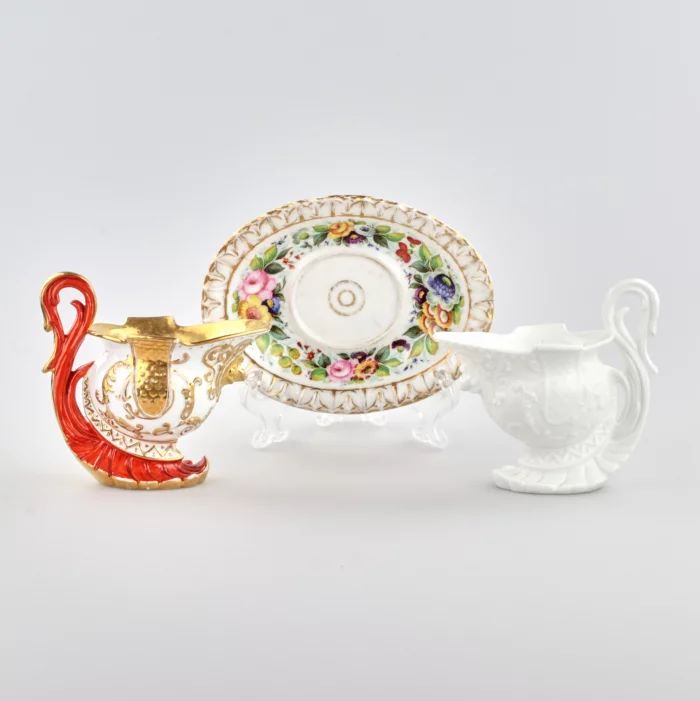
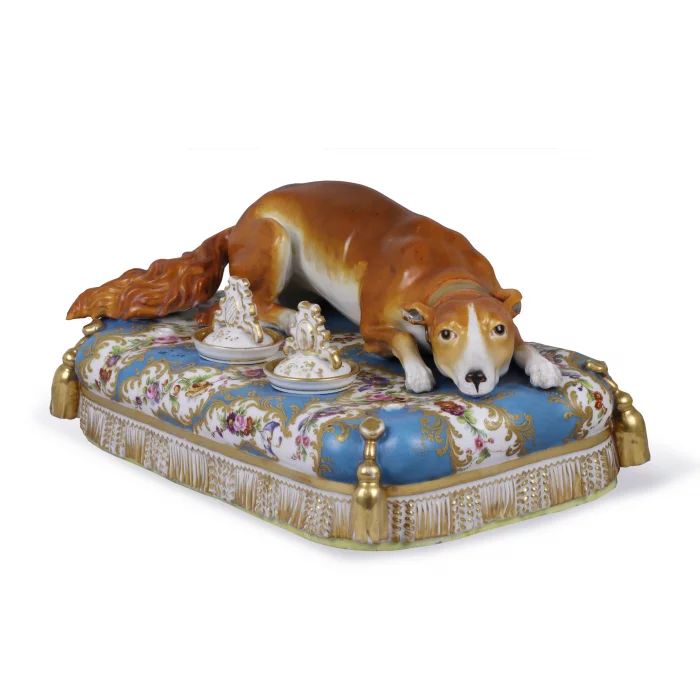
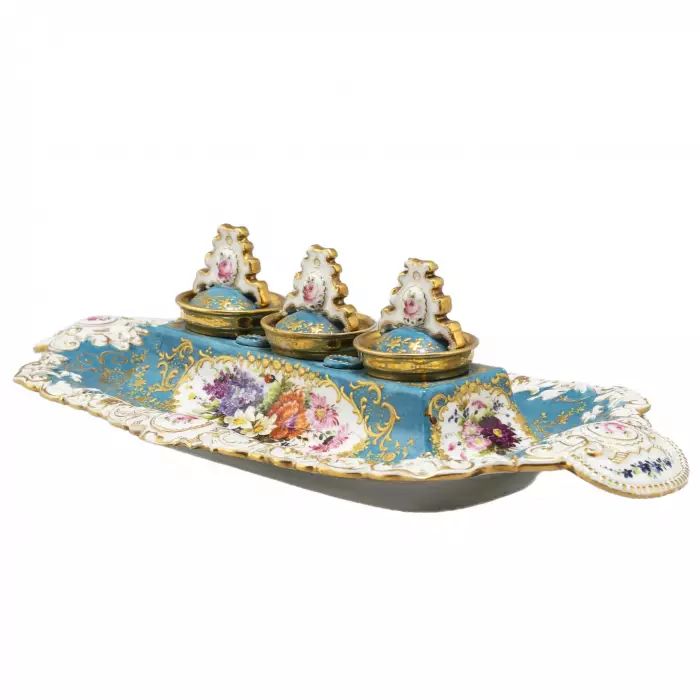
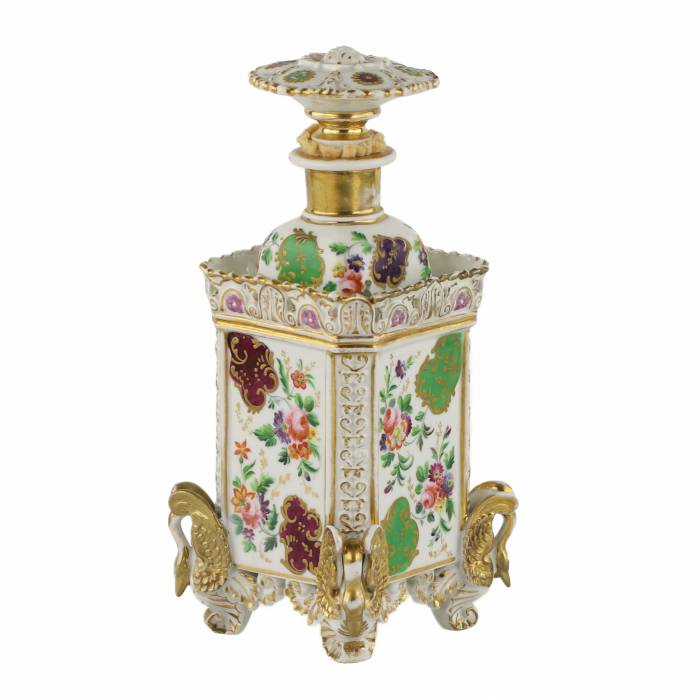
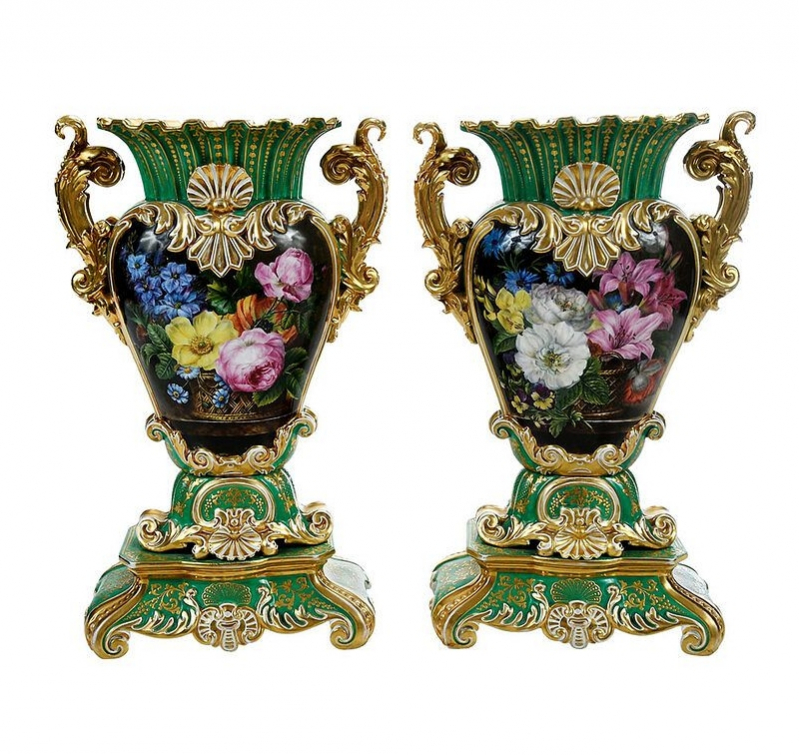
The range included interior vases of various formats, mantel clocks with sculptural groups, candelabra, centrepieces and small sculptural objects. The works are characterised by elaborate silhouettes, pronounced asymmetry derived from Neorococo vocabulary, and extensive gilding. Relief ornament and richly coloured overglaze painting were widely employed. The stylistic language combined Neorococo, Orientalist motifs and elements of Eclecticism. The colour palette was notably saturated, incorporating cobalt, emerald, pink and purple tones that heightened the decorative effect. Sculptural handles, masks and applied modelling contributed to the distinctive architectural presence of the objects.
LEGACY AND MASTERPIECES
Works by Jacob Petit are preserved in museum and private collections of nineteenth-century decorative arts in Europe and the United States. Representative examples include mantel clocks with multi-figure compositions from the 1840s, paired Neorococo vases with elaborate gilding, and candelabra incorporating Orientalist motifs. These objects demonstrate the synthesis of sculpture and applied form characteristic of mid-nineteenth-century French porcelain. The manufactory contributed to the development of eclectic decorative plasticity and to the dissemination of architecturally complex forms within Second Empire interiors.