Price:
5500 €
Add to cart
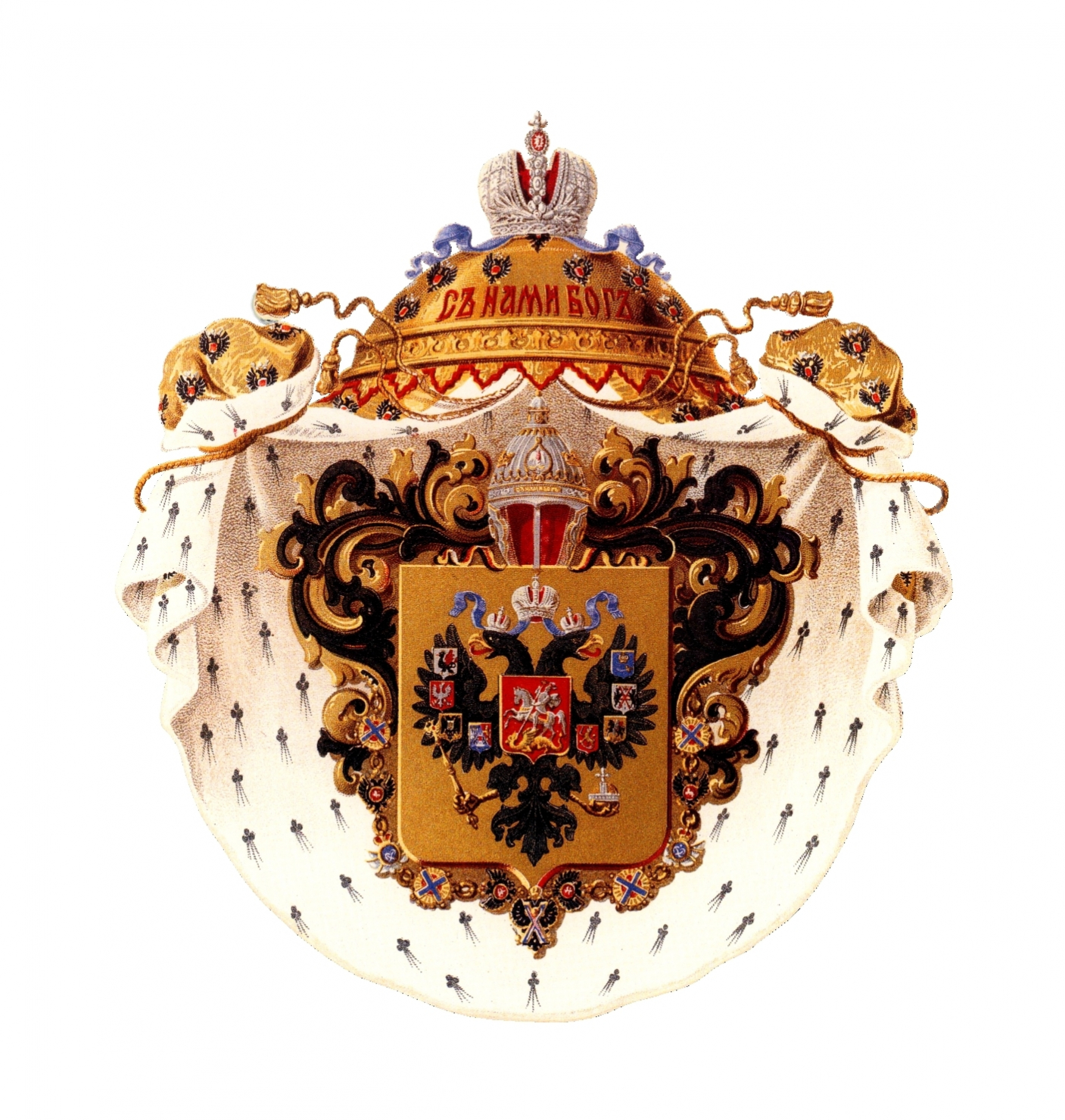
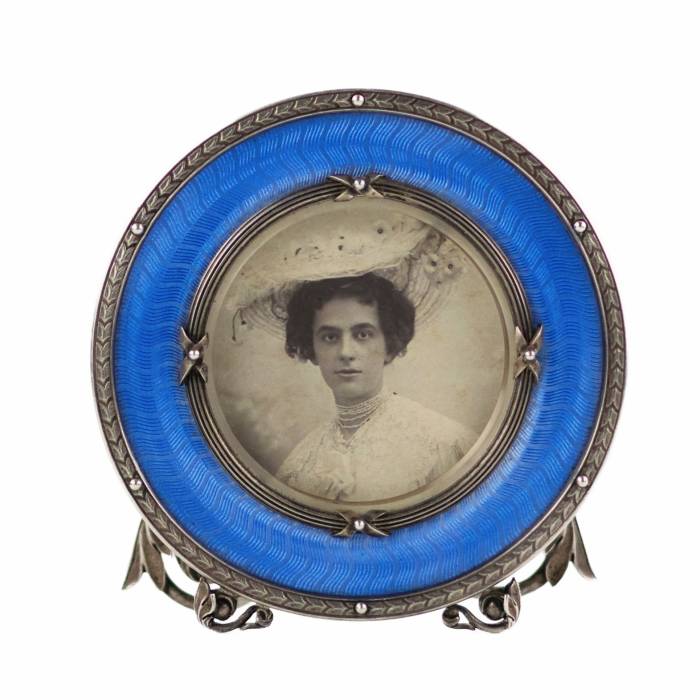
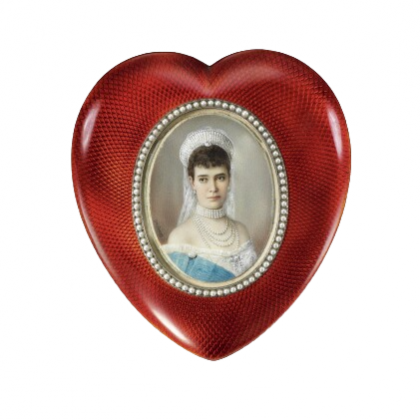
Ivan Savelyevich Britsyn was a St Petersburg jeweller and master goldsmith of the early 20th century, one of the leading representatives of Russian enamel art. A former employee of the House of Fabergé, he founded the firm “Russkaya Emal” and served as a supplier to members of the Imperial family and the Cabinet of His Majesty. He is renowned for his distinctive authorial style of guilloché enamel.
We will only share latest what our month on the IVAN SAVELYEVICH BRITSYN.
BIOGRAPHY
Ivan Savelyevich Britsyn was born in 1870. His professional formation took place in St Petersburg, where he worked for the firm of Fabergé, as recorded in the notebook of Eugène Fabergé with the note “Formerly our employee” (Archive of Tatiana Fabergé, Versonnex, France). In March 1903, Britsyn passed the examination for the title of master goldsmith and established his own enterprise, “Russkaya Emal”, located at 12 Malaya Konyushennaya Street. The workshop employed between 10 and 15 craftsmen. Britsyn died in 1952.
CAREER STAGES
1903: Obtained the title of master goldsmith and founded the firm “Russkaya Emal”.
1909: The firm’s works were awarded a gold medal at the St Petersburg Craft Exhibition.
1910-1917: Regular supplies to the courts of members of the Imperial family and to the Cabinet of His Majesty; strong and sustained demand on the British market.
1917: The Revolution interrupted the period of artistic prosperity.
1923: During the NEP period, Britsyn maintained his own workshop.
1924-1952: Continued professional activity during the Soviet period; documentation of this phase remains fragmentary. Ivan Savelyevich Britsyn was awarded the medal “For the Defence of Leningrad”.
STYLE, TECHNIQUE AND DIRECTION
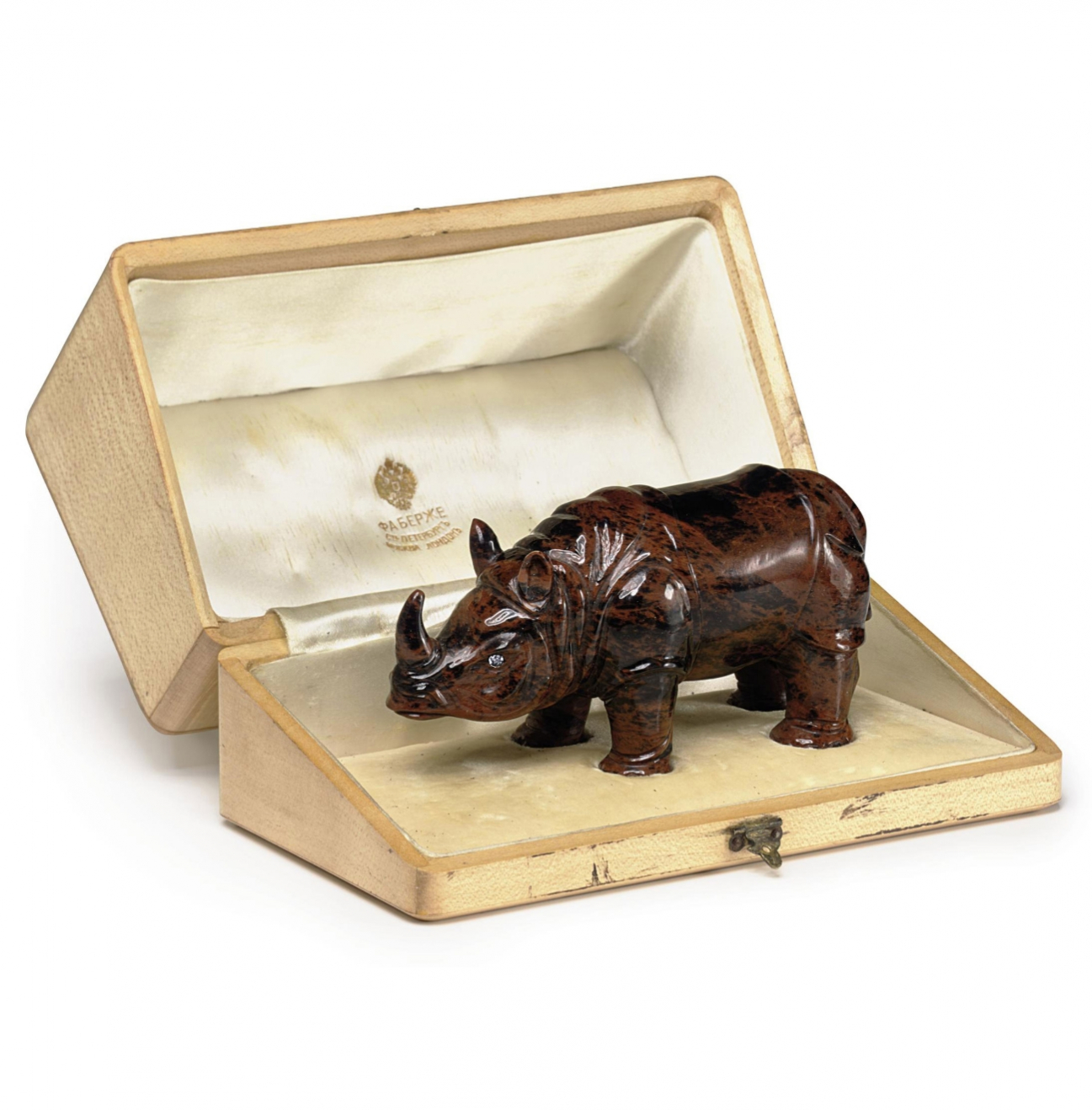
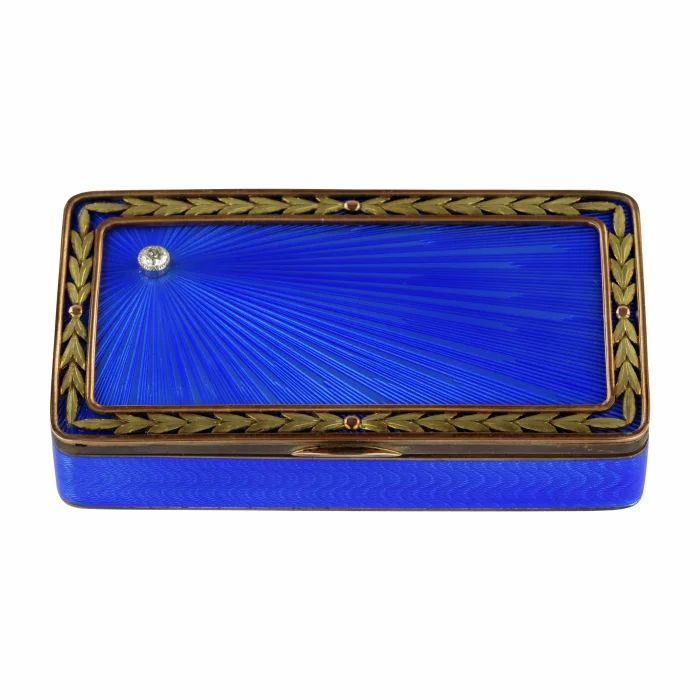
Britsyn’s work developed within the framework of the St Petersburg jewellery school of the early 20th century, yet it displays a clearly defined and independent artistic identity. His style does not imitate Fabergé and is characterised by original forms, a large-scale guilloché pattern with unexpected geometry, and a more contrasting, saturated palette of translucent enamels. His hallmark works are cigarette cases with pale blue and white transparent enamel. Britsyn worked in gold and silver, employed gilding, produced objects in stone and purpurin, collaborated with A. Sumin, and was among the few jewellers of his generation to create table clocks.
LEGACY AND MASTERPIECES
The works of Ivan Britsyn are represented in major museum and private collections and occupy a significant place in the history of Russian jewellery art. The Peterhof State Museum-Reserve holds the largest collection of his works worldwide. In 1989, Britsyn’s pieces were presented in the most comprehensive manner to date at the exhibition “The Great Fabergé” held at the Yelagin Palace, where their success contributed to the establishment of sustained international interest. In 2003, at the initiative of the Peterhof State Museum-Reserve, a monument was erected on Britsyn’s grave at the Novovolkovskoye Cemetery.
MARKET ANALYSIS
Masterpieces: Authorial museum-level works, including cigarette cases and table clocks with guilloché enamel, belong to the upper market segment. The indicative price range is €100,000-200,000 when exceptional examples with confirmed provenance appear.
Workshop / Circle: The main body of works produced by the firm “Russkaya Emal” demonstrates steady international demand and is valued alongside Fabergé objects. The indicative price range is €50,000-100,000 depending on enamel quality, rarity of palette, and condition.
School / Followers: Simpler or later works, as well as objects from the close circle, are generally valued in the range of €1,000-50,000. Market demand is confirmed by results achieved at leading international auction houses.