×
Create account and receive
15% DISCOUNT
your first acquisition
or
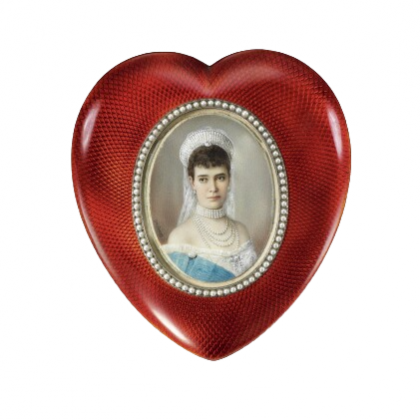
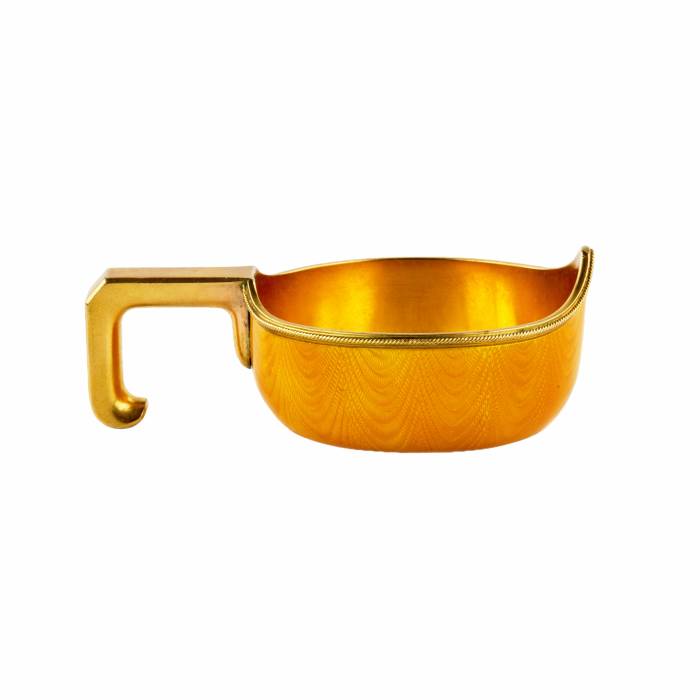
Guilloché enamel is a refined decorative technique based on applying transparent enamel over a mechanically engraved ornamental surface. Originating in France in the second half of the 18th century, it spread widely in European jewellery and watchmaking and reached its highest artistic achievement in Russia at the turn of the 19th and 20th centuries, remaining in use in contemporary practice today.
We will only share latest what our month on the GUILLOCHÉ ENAMEL.
HISTORY AND ORIGIN
The guilloché technique emerged in France around 1760 alongside the development of engine-turning machines that enabled the creation of precise geometric, wave-like, and radial patterns on metal surfaces. Initially, it was used in watchmaking for decorating dials and cases, as well as in the production of snuffboxes and personal luxury objects. During the 19th century, guilloché enamel became widespread in France, Switzerland, and Great Britain, and by the late 19th century it occupied a special place in the decorative arts of the Russian Empire. The late 19th and early 20th centuries marked the peak of the technique, which was not lost thereafter and continues to be practiced in both authorial and restoration work to the present day.
TECHNOLOGY AND EXECUTION
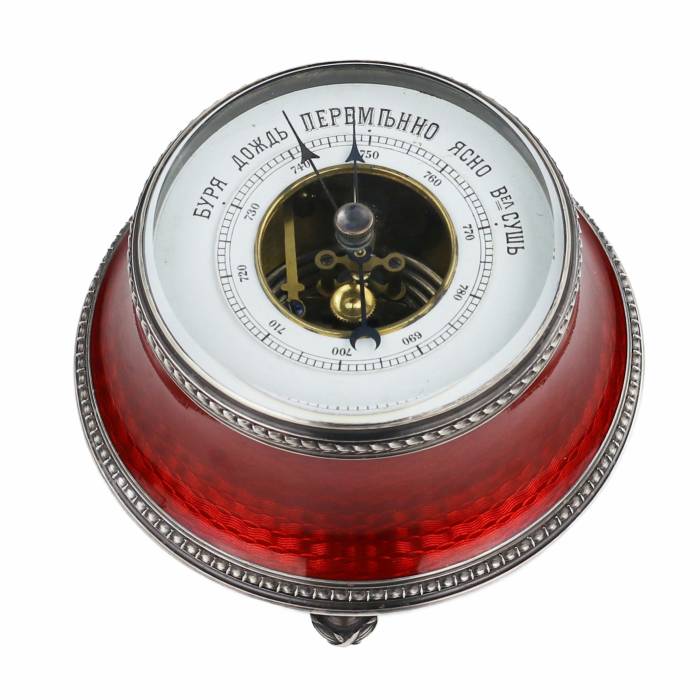
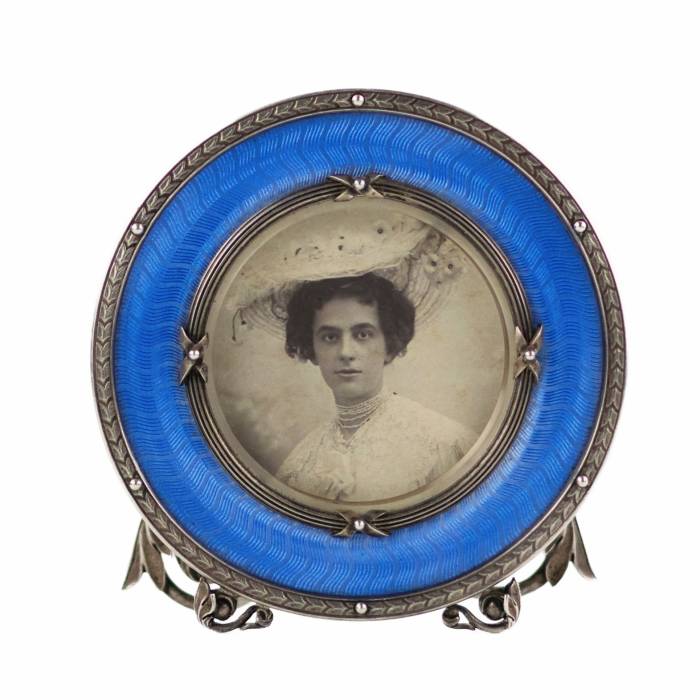
The technique is based on mechanical guilloché engraving - the cutting of rhythmic, highly regular patterns into gold or silver using hand-operated or semi-automatic engine-turning machines. Motifs include grids, radiating lines, waves, and concentric compositions. A layer of transparent or semi-transparent enamel, most often coloured, is applied over the engraved surface. During firing, the enamel fills the engraved recesses while preserving the clarity of the underlying pattern, producing an effect of depth, shimmer, and optical vibration. The quality of the finished object depends on the precision of the engraving, the purity of the enamel, and strict control of firing temperatures.
ARTISTIC FEATURES AND STYLISTIC CONTEXT
Guilloché enamel is distinguished by its refined decorative quality and complex interaction with light. As light passes through the transparent enamel layer and reflects off the engraved metal beneath, it creates a sense of movement and colour variation depending on the viewing angle. The technique integrated seamlessly into the aesthetics of Neoclassicism, Belle Époque, Art Nouveau, and Russian Modern, emphasising precision of form, rhythmic surface treatment, and a high level of artistic craftsmanship.
APPLICATION AND MASTERS
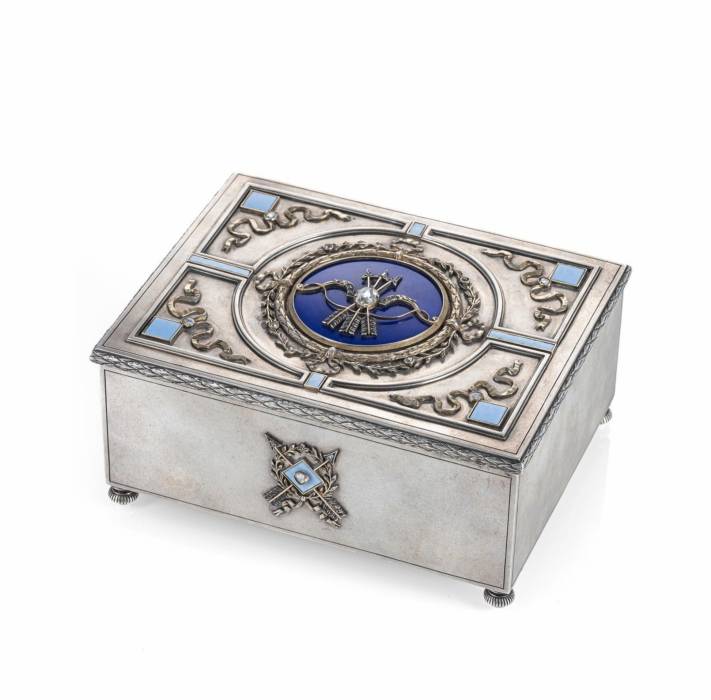
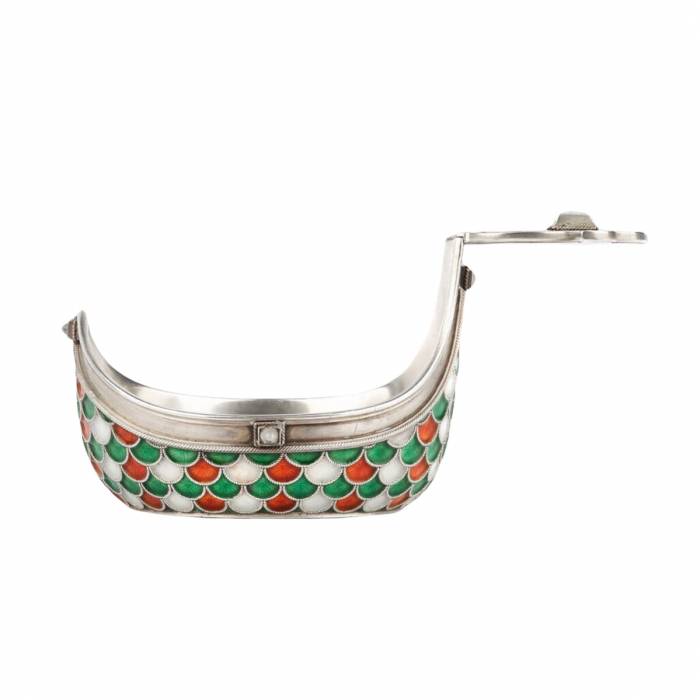
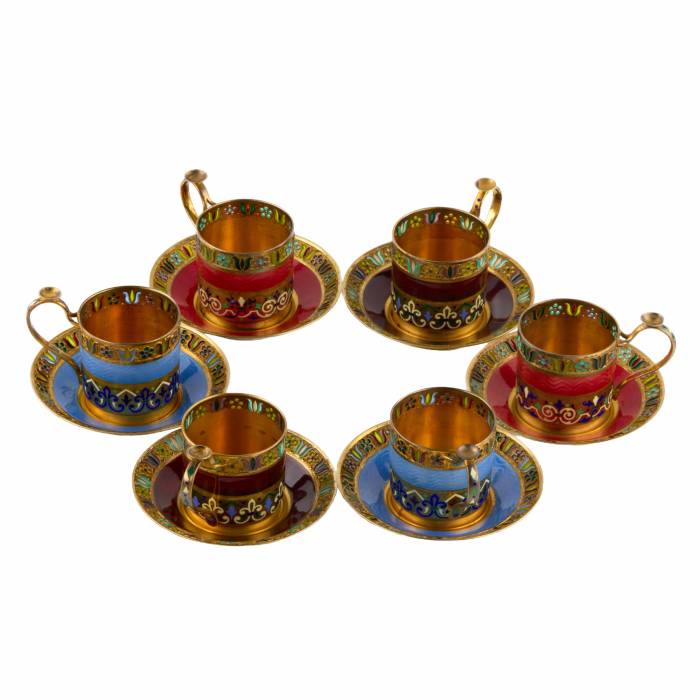
Guilloché enamel was widely used in the creation of snuffboxes, cigarette cases, caskets, watches, tableware, jewellery, and ceremonial accessories. The absolute pinnacle of the technique is represented by the Imperial Easter eggs and court commissions of the firm Fabergé, in which guilloché enamel reached an exceptional artistic and technical level and became a defining feature of the house’s style at the turn of the 19th and 20th centuries.
Alongside the Russian school, the technique was developed by leading European jewellery houses. Among them are Cartier, Boucheron, Van Cleef & Arpels, and Tiffany & Co., which employed guilloché enamel in jewellery and luxury objects of the Belle Époque and Art Nouveau periods. In the field of horology, the technique was further refined by houses such as Breguet, Patek Philippe, and Vacheron Constantin, where guilloché enamel was used for high-grade dials and cases, underscoring both mechanical precision and decorative sophistication.
Works featuring guilloché enamel are represented in the collections of the State Hermitage Museum, the State Historical Museum, the Musée des Arts Décoratifs in Paris, as well as major museum and private collections in Europe and the United States. In the 21st century, the technique continues to be employed in authorial jewellery and haute horlogerie as a sign of continuity with classical artistic traditions.
MARKET ANALYSIS
Exceptional examples: Imperial Easter eggs by Fabergé, incorporating guilloché enamel combined with precious stones, complex enamel palettes, and sophisticated mechanical elements. These works represent the highest point of the technique’s development in decorative art at the turn of the 19th and 20th centuries. Price range: €1-100 million. Auction record: The Rothschild Egg, 1902, sold in 2007 for €8.9 million.
Rare examples: Jewellery and presentation objects from the late 19th and early 20th centuries, produced in limited numbers and demonstrating a high level of guilloché engraving and enamelling. Price range: €20,000-100,000. Auction record: Guilloché enamel brooch, circa 1910, sold in 2020 for €65,000.
Standard examples: Serial decorative and utilitarian objects, as well as contemporary authorial interpretations of the technique. Price range: €2,000-20,000. Auction record: Enamelled case, circa 1905, sold in 2018 for €18,000.