Price:
15000 €
Add to cart
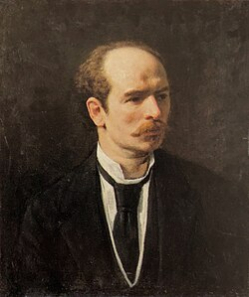
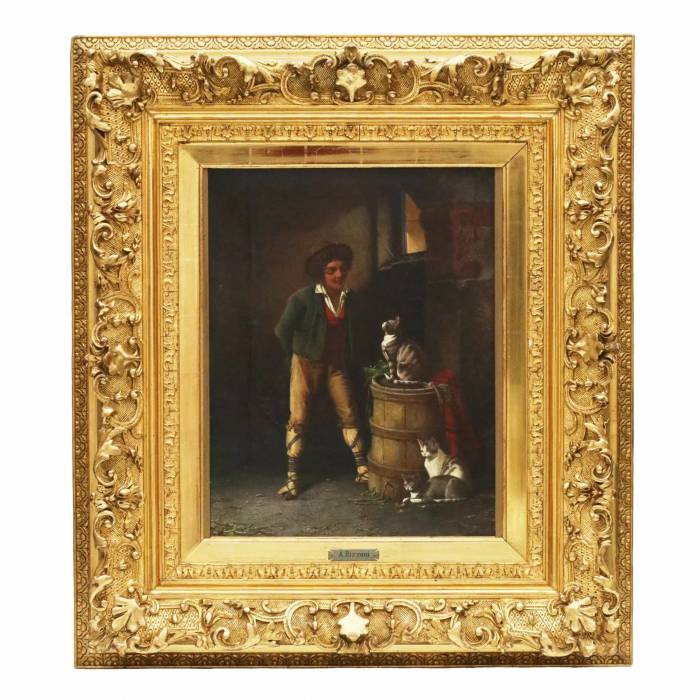
Alexander Rizzoni was a Russian painter of Italian origin, a representative of the Academic School and the Genre Painting movement of the second half of the 19th century. He studied at the Imperial Academy of Arts and worked in both Russia and Italy. He is known for everyday scenes attentive to social context and psychological characterisation.
We will only share latest what our month on the ALEXANDER RIZZONI.
BIOGRAPHY
Alexander Antonovich Rizzoni was born in 1836 in Rome into a family of artists. In his youth he moved to Russia. He studied at the Imperial Academy of Arts in Saint Petersburg, where his artistic language was shaped by academic tradition and Russian genre painting. For his academic achievements he received official distinctions. He died in 1902.
CAREER MILESTONES
The early period of his career was connected with academic training and the development of the historical and everyday genre. In the 1860s-1870s he actively worked within genre painting, depicting scenes from the daily life of Italian and Russian communities. His works were exhibited at academic exhibitions. The later period is marked by a sustained interest in камер compositions with multi-figure arrangements.
STYLE, TECHNIQUE AND ARTISTIC VISION
Rizzoni’s oeuvre belongs to Academic Realism. His works are characterised by balanced compositions, detailed rendering of interiors and costume, and subtle modelling of light and shadow. The artist paid particular attention to psychological characterisation and the social dimension of his subjects. His principal medium was oil on canvas.
LEGACY AND MASTERPIECES
Among his characteristic works are genre scenes depicting Italian peasants and the urban lower classes, including compositions featuring children and everyday narratives. His paintings are held in Russian museum collections, including the State Russian Museum and regional art museums. Rizzoni’s significance lies in his contribution to the development of the Russian genre school of the second half of the 19th century and in shaping the image of the “little man” within academic tradition.