Price:
35000 €
Add to cart
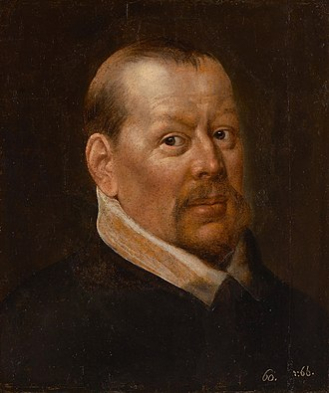
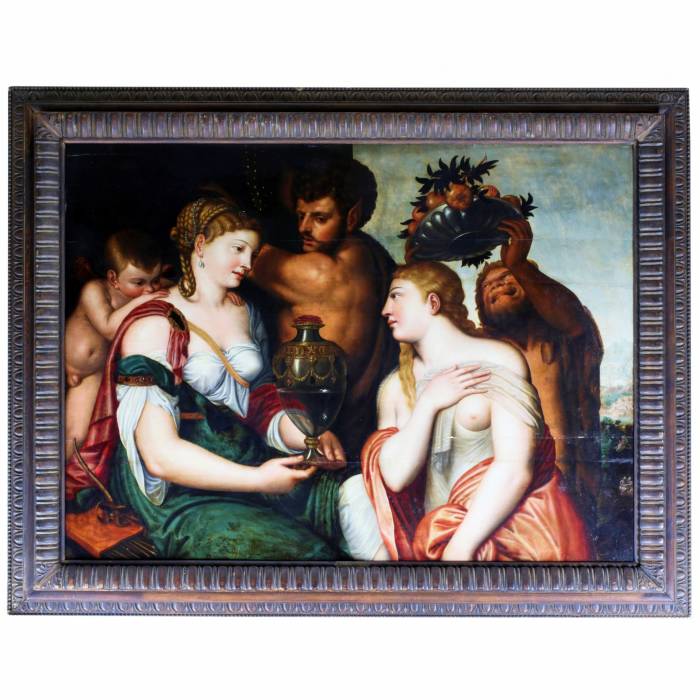
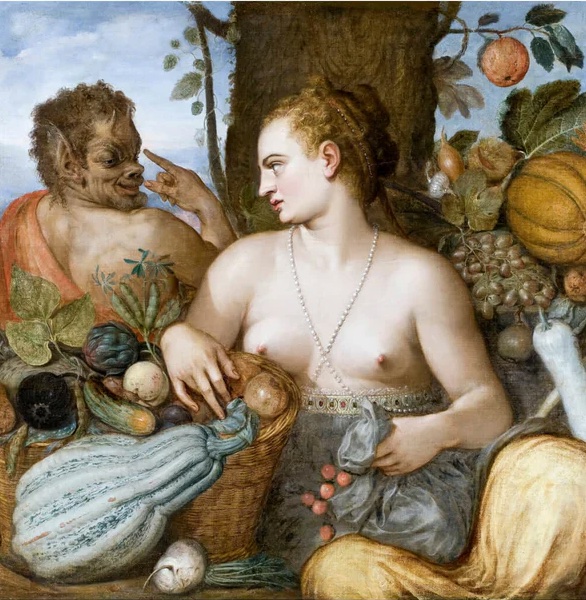
Frans Floris de Vriendt was a Flemish painter of the Antwerp school of the sixteenth century and one of the leading representatives of Romanism in the Netherlands. His activity contributed to the establishment of monumental history painting in Antwerp, based on a synthesis of Italian Mannerism and the Northern European tradition.
We will only share latest what our month on the FRANS FLORIS DE VRIENDT.
BIOGRAPHY
Frans Floris de Vriendt was born around 1517 in Antwerp into the family of the sculptor Cornelis Floris, which ensured his early exposure to an artistic environment. He received his initial training in the workshop of Lambert Lombard in Liège, one of the principal transmitters of Italian artistic language in the Low Countries. In the 1540s Floris travelled to Italy, most likely visiting Rome and other artistic centres, where he studied the works of Michelangelo, Raphael and representatives of Roman Mannerism.
After returning to Antwerp, in 1547 he was admitted to the Guild of Saint Luke and soon established his own workshop, which rapidly became one of the largest in the city. Floris acquired a prominent position in the artistic life of Antwerp, combining his practice as a painter with the organisation of large-scale production of altarpieces and historical compositions. He died in 1570, leaving behind a developed school of pupils and followers.
CAREER MILESTONES
The early phase of his career was characterised by an active assimilation of Italian compositional models and anatomical systems of figure construction. During the 1550s Floris developed his own version of Romanism, adapted to the demands of Antwerp patrons. He received major ecclesiastical and private commissions, producing altarpieces as well as mythological and allegorical scenes.
In this period his workshop became an important centre for the training of young painters. Among his pupils and followers were Maarten de Vos and Frans Francken the Elder, who continued the development of Flemish history painting. After 1560 his compositions became increasingly complex, with heightened dramatic gestures and facial expressions and a growing interest in multi-figure scenes organised within dynamic spatial structures. The iconoclastic events of 1566 led to the destruction of several of his altarpieces, significantly affecting the preservation of his oeuvre.
STYLE, TECHNIQUE AND ARTISTIC VISION
Frans Floris stands as a central figure of Romanism, an artistic movement oriented towards the reception of Italian High Renaissance and Mannerist models in Northern Europe. His painting is distinguished by monumental figures, tense plasticity and emphasised anatomical precision. Characters are arranged within complex spatial constructions, often set against architectural backdrops of classical inspiration.
The compositional structure is built upon the interaction of diagonals and rhythmic groupings of figures. His palette combines saturated reds, blues and ochres with pronounced contrasts of light and shadow. The human body functions as the principal bearer of emotional and intellectual meaning. Floris adapted the Italian model of the heroised figure to the Northern tradition of detailed painting, creating a stable synthesis that influenced the subsequent development of Flemish art.
LEGACY AND MASTERPIECES
Among his most significant works are The Fall of the Rebel Angels, circa 1554, Royal Museums of Fine Arts of Belgium, Brussels; The Judgement of Solomon, 1565, Royal Museum of Fine Arts, Antwerp; and several altarpieces for Antwerp churches, partially destroyed during the iconoclastic unrest.
The work of Floris played a structural role in the formation of Flemish history painting in the second half of the sixteenth century. His artistic programme represents a transitional stage between the Northern Renaissance and the early Baroque, preparing the ground for the school of Peter Paul Rubens.