Price:
5500 €
Add to cart
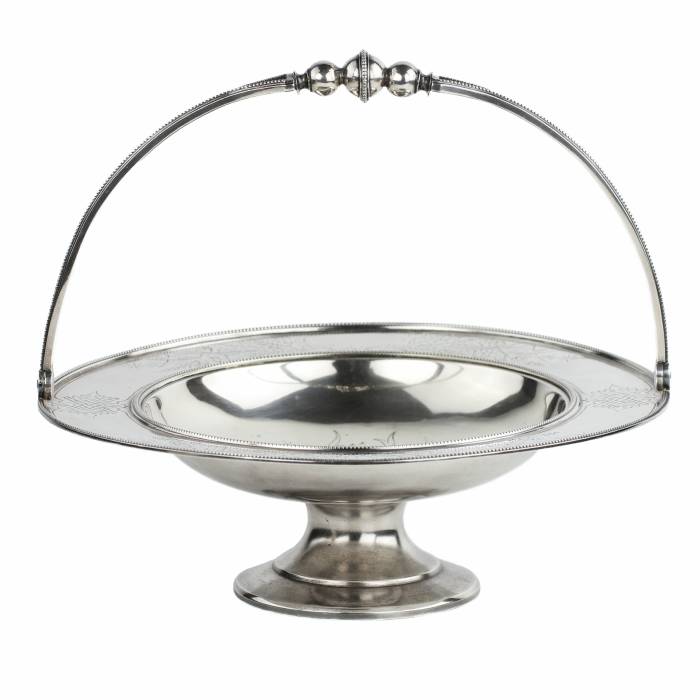
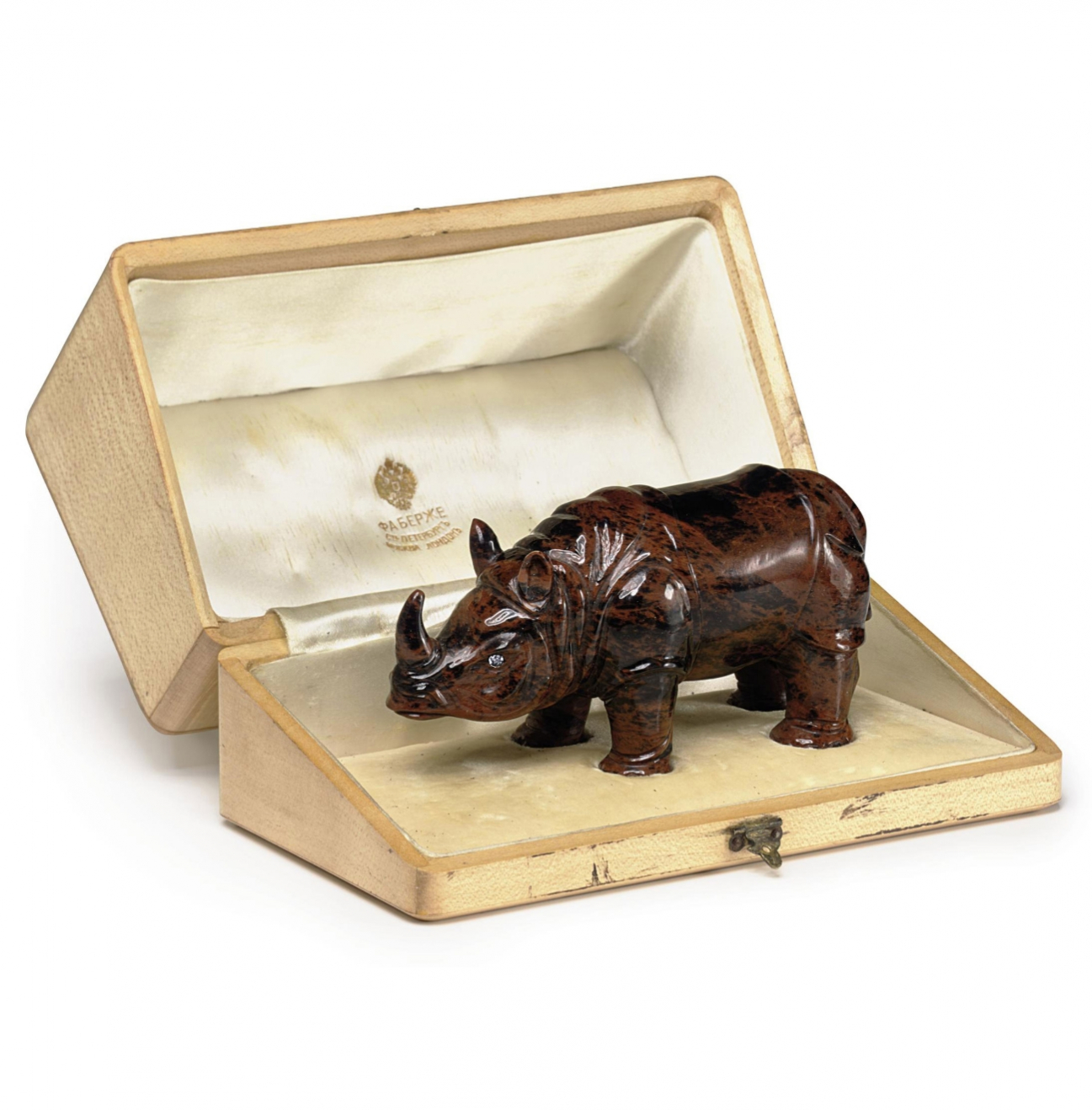
Erik August Kollin was a Finnish-born jeweller and the first chief workmaster of the House of Carl Fabergé in St Petersburg. From 1870 to 1886 he supervised production and played a decisive role in shaping the artistic language of early Fabergé. He created the first Imperial Easter Egg in 1885.
We will only share latest what our month on the ERIK AUGUST KOLLIN.
BIOGRAPHY
Erik August Kollin was born in 1836 in the village of Pohja in the Grand Duchy of Finland. In 1852 he entered the jewellery workshop of A. Palmén in Tammisaari as an apprentice. By 1858 he was already registered in St Petersburg as an independent master goldsmith. His professional abilities attracted the attention of August Holmström, one of Fabergé’s leading masters. In 1870 Kollin established his own workshop and in the same period became chief workmaster of the firm of Carl Fabergé.
CAREER MILESTONES
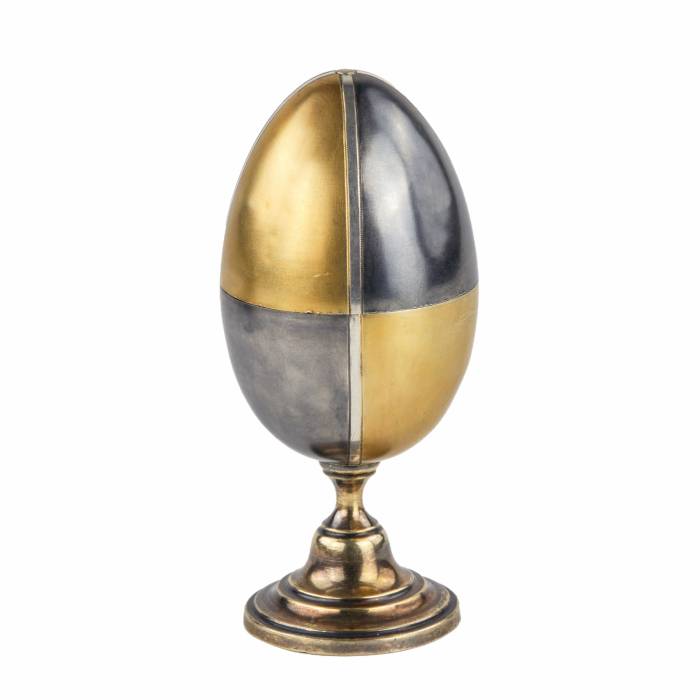
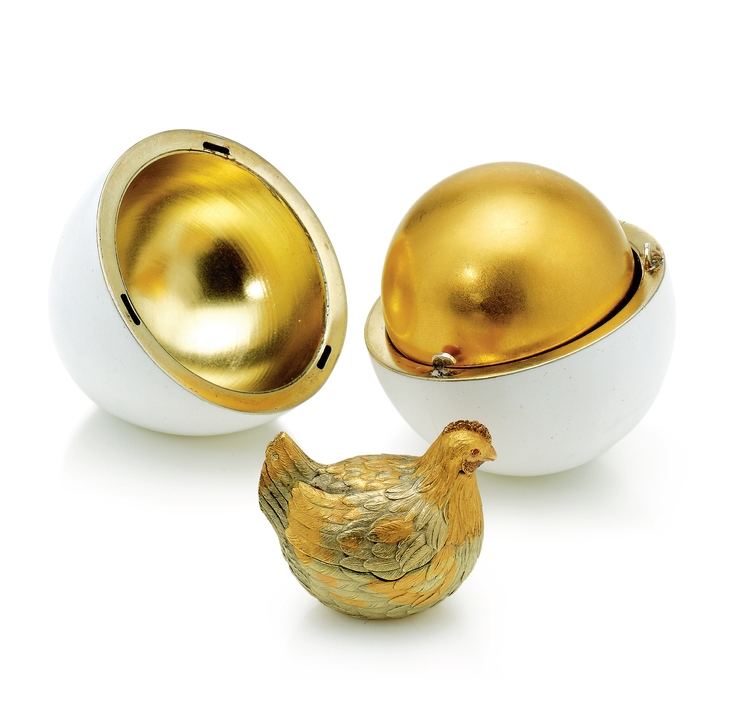
The years 1870 - 1886 were pivotal in the history of the company. Kollin directed the production of silver and gold objects and contributed to defining the stylistic identity of the brand. In 1885, by commission of Emperor Alexander III, he created the first Imperial Easter Egg, known as the “Hen”, for Empress Maria Feodorovna. The object incorporated a system of nested surprises: an enamelled shell, a gold “yolk”, a hen and miniature elements concealed within. In 1886 the position of chief workmaster passed to Mikhail Perkhin, after which Kollin continued to work independently.
STYLE, TECHNIQUE AND ARTISTIC VISION
Kollin worked within the framework of Historicism, drawing on Neo-Renaissance, Neo-Rococo and early Russian Revival forms. His oeuvre demonstrates an interest in Old Russian and Scythian ornamental motifs, later significant for the development of Russian Art Nouveau. He employed chasing, casting, engraving and gilding, and worked with nephrite, agate, rock crystal and precious stones. The workmaster’s mark “E.K” or “EK” corresponds to the period of his collaboration with Fabergé.
LEGACY AND MASTERPIECES
Among his most significant works are:
Kollin’s activity was instrumental in establishing the artistic programme of early Fabergé and in founding the tradition of Imperial Easter Eggs.