Price:
30000 €
Add to cart
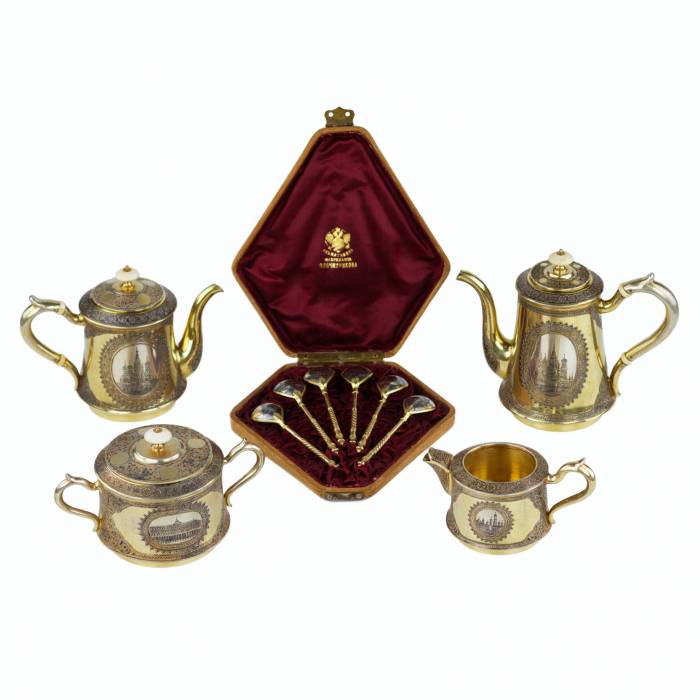
The Moscow silver factory founded in 1852 by Vasily Semyonov held a stable position within the capital’s silver production. The enterprise was later inherited by Maria Vasilyevna Semyonova, under whose direction the workshop developed painted enamel techniques and became associated with the artistic movement of Russian Modern.
We will only share latest what our month on the FACTORY OF VASILY SEMYONOV.
HISTORY AND DEVELOPMENT
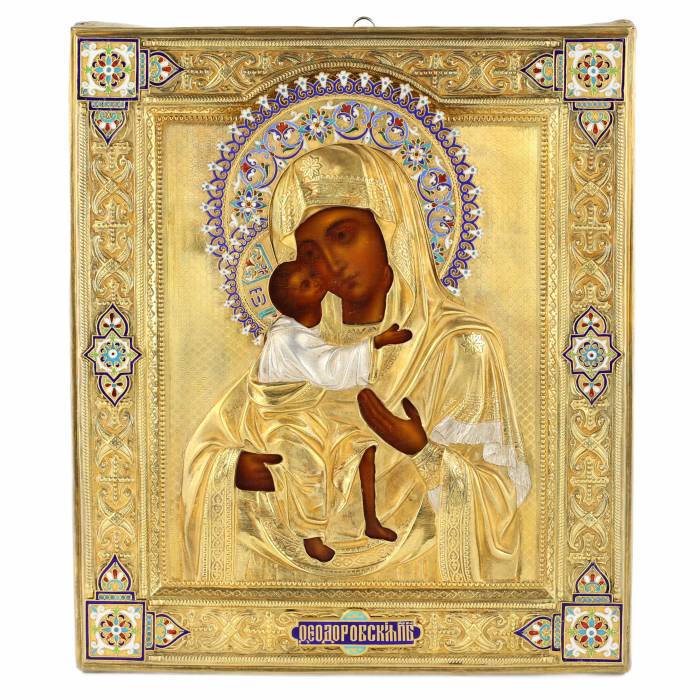
The factory was established in Moscow in 1852 by Vasily Semyonov. By the second half of the 19th century, it had developed into a solid enterprise with an annual turnover reaching 75,000 roubles and employing more than forty craftsmen. The main production included table silver, niello work, ecclesiastical objects and icon revetments.
The organisation of labour combined traditional craftsmanship with elements of a factory system, ensuring consistent quality and the ability to execute large commissions. The enterprise operated within the cooperative structure characteristic of Moscow silver production, interacting with major trading houses and private clients.
After the founder’s death, management passed to his daughter, Maria Vasilyevna Semyonova. Continuing the family dynasty, she preserved the production base while initiating an artistic transformation of the range, particularly through the development of enamel techniques.
TITLES, AWARDS AND COMMISSIONS
The factory collaborated with leading Moscow silver firms, including Factory of Pavel Ovchinnikov, executing both independent and contract commissions.
Works of the workshop are preserved in the collection of the State Historical Museum in Moscow, where cups, beakers and niello-decorated vessels attributed to the factory are held. The presence of such objects in a major museum collection confirms the professional standing of the enterprise within the history of Moscow silver craftsmanship.
ARTISTIC SPECIFICITY AND TECHNIQUES
The early period of activity is characterised by refined engraving and confident mastery of niello. Compositions display dense structuring and precise adaptation of ornament to the object’s form. The design is carefully integrated into the surface, maintaining proportional balance between decoration and volume. Niello enhances graphic clarity and ornamental contrast.
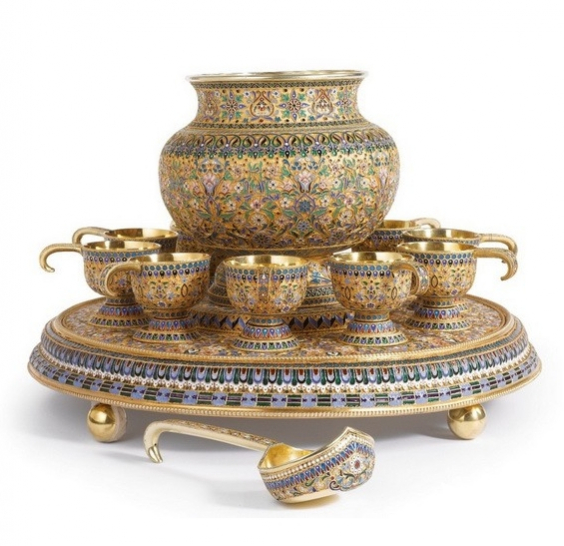
Under Maria Vasilyevna Semyonova, enamel techniques were significantly expanded. The production included painted kovshi, enamelled tea-glass holders, caskets and snuff boxes. Open surfaces of lids were treated as pictorial fields for polychrome enamel painting. A characteristic feature became the use of a gilded punched ground highlighting the brightness of enamel over filigree. The combination of filigree, gilding and painted enamel corresponds to the aesthetics of Russian Modern at the turn of the 20th century.
LEGACY AND MASTERPIECES
The production of the factory reflects the evolution of Moscow silver from Historicist traditions to the decorative solutions of Russian Modern. Niello works of the early period and enamelled objects of the Maria Semyonova era illustrate dynastic continuity and the development of artistic technologies within the Moscow school.
Objects from the workshop are represented in museum and private collections and contribute to the study of Moscow silver production of the late 19th and early 20th centuries.
PRICE HISTORY
The market for works of the Factory of Vasily Semyonov is situated within the segment of Russian silver of the second half of the 19th and early 20th centuries. Confirmed sales are recorded at specialised Russian art auctions and international decorative arts sales.
Exceptional works: Large enamel objects of complex composition and museum quality are rare. This category includes kovshi, icon revetments and major decorative pieces with painted enamel over filigree. The confirmed market range is €50,000 - 100,000 depending on condition, rarity and documented provenance.
Rare works: Niello services, icon revetments, enamelled caskets and snuff boxes demonstrate sustained interest among collectors of Russian silver. The market range is €10,000 - 50,000. Final prices depend on artistic quality, enamel preservation, silver weight and provenance.
Series works: Tableware with niello and objects of simpler decorative treatment regularly appear on the Russian silver market and constitute the main volume of trade. The market range is €1,000 - 10,000 depending on condition, metal weight and quality of ornament.