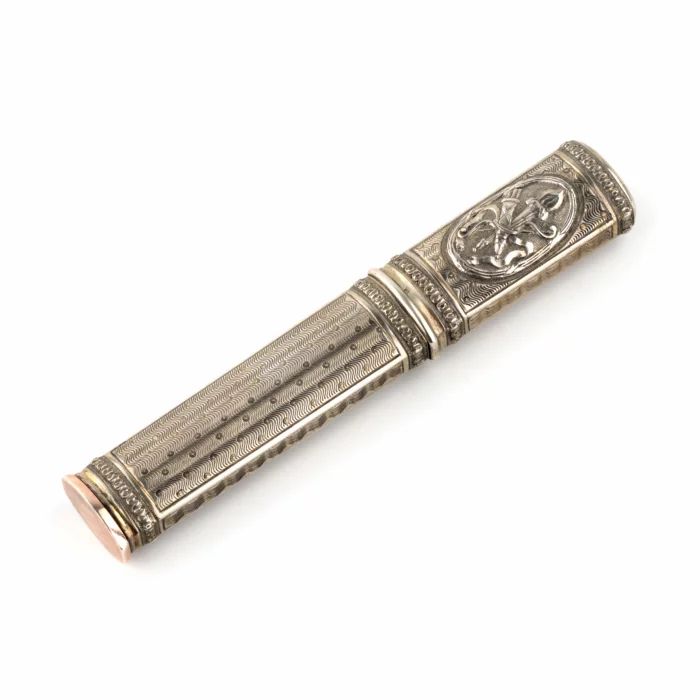
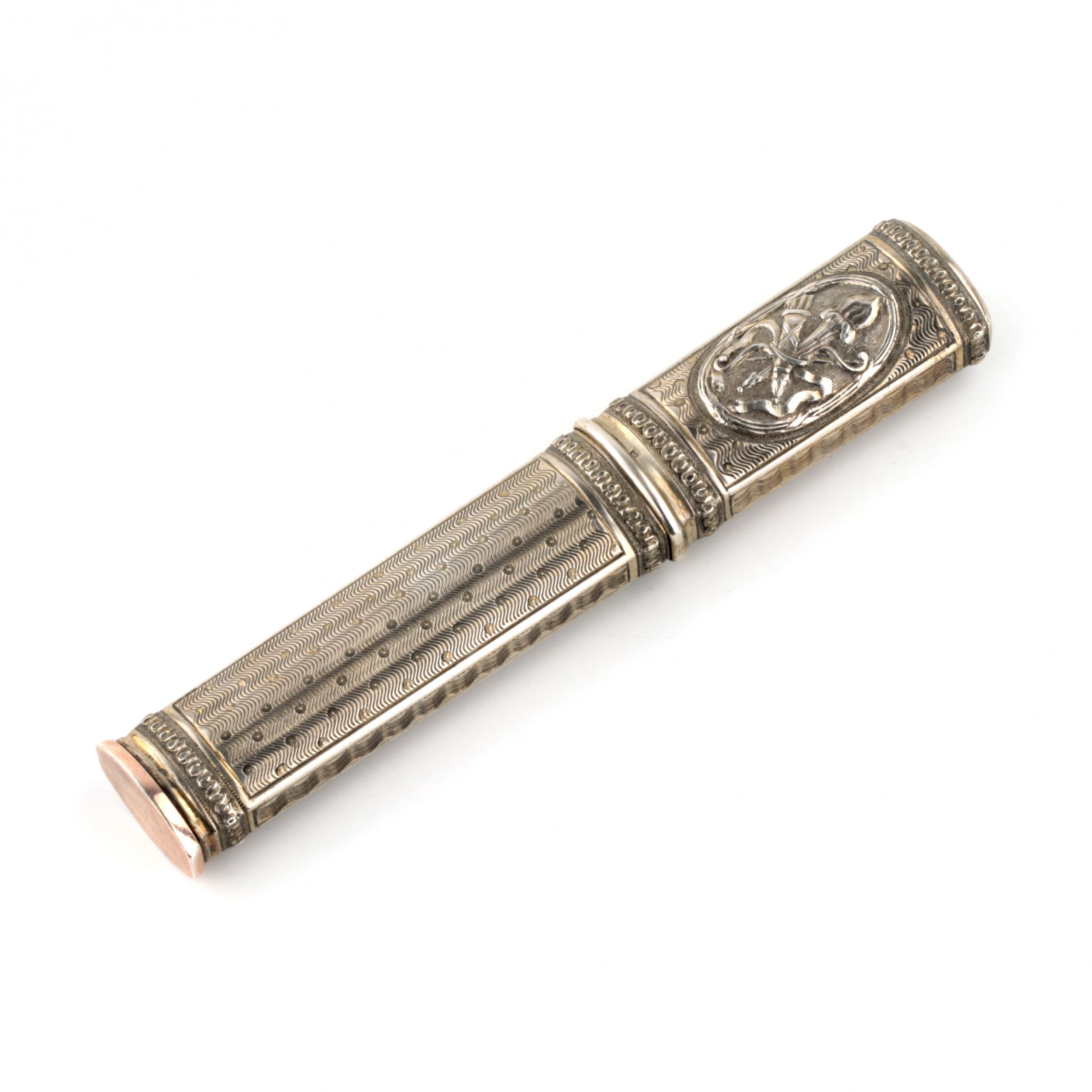
Étui à crayons en argent de style Louis XVI.

Étui à crayons en argent de style Louis XVI.

ID-ANTQ-3741
Live auction begins in:
| April 10, 2026 2:42 AM GMT+03:00
Estimé
150 - 200 EUR
Current Bid
EUR
 
0 Bids
Register for bidding
Request more info
Use our cost calculator

Discover how the value of similar works has evolved over the past 10 years. Art is not only beauty — it's an investment.

Price History

Discover how the value of similar works has evolved over the past 10 years. Art is not only beauty — it's an investment.

Request a Shipping Quote

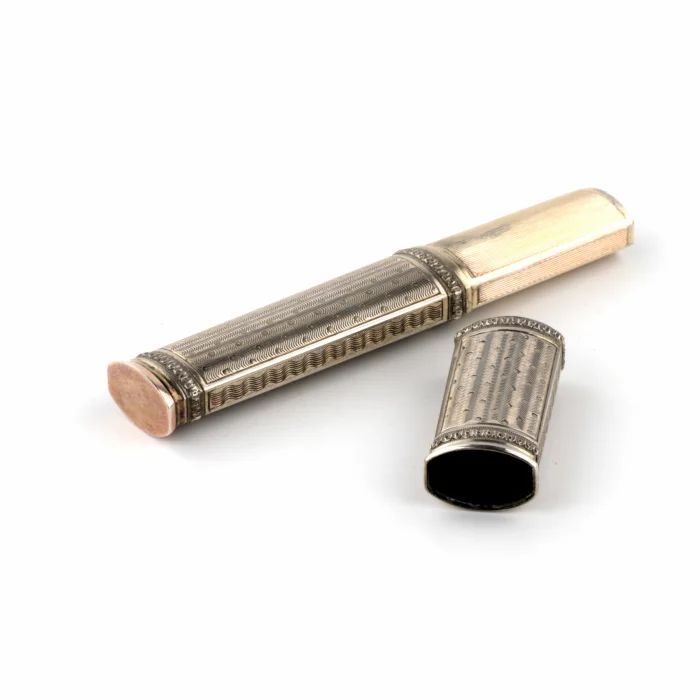
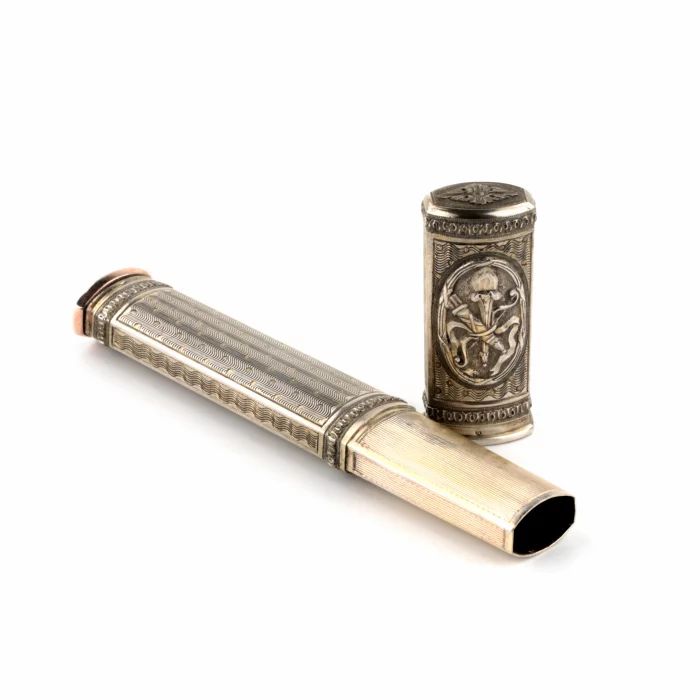
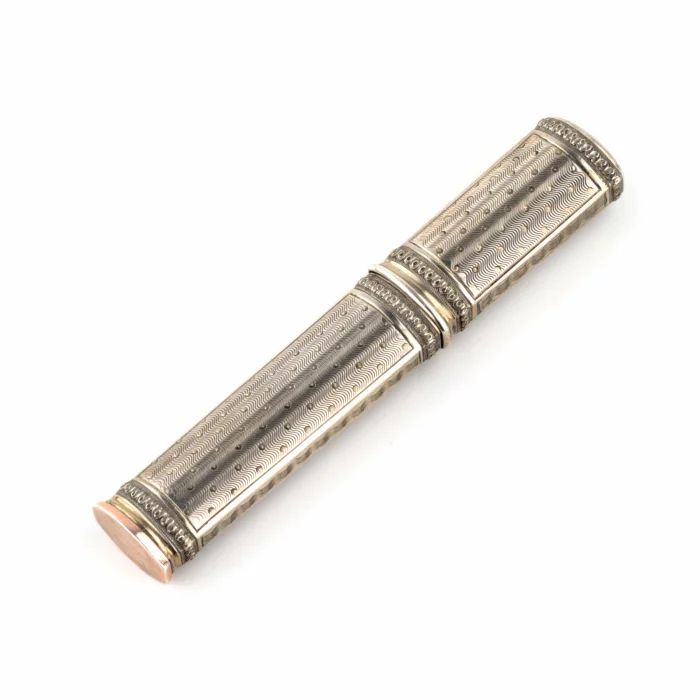
Étui à crayons en argent.

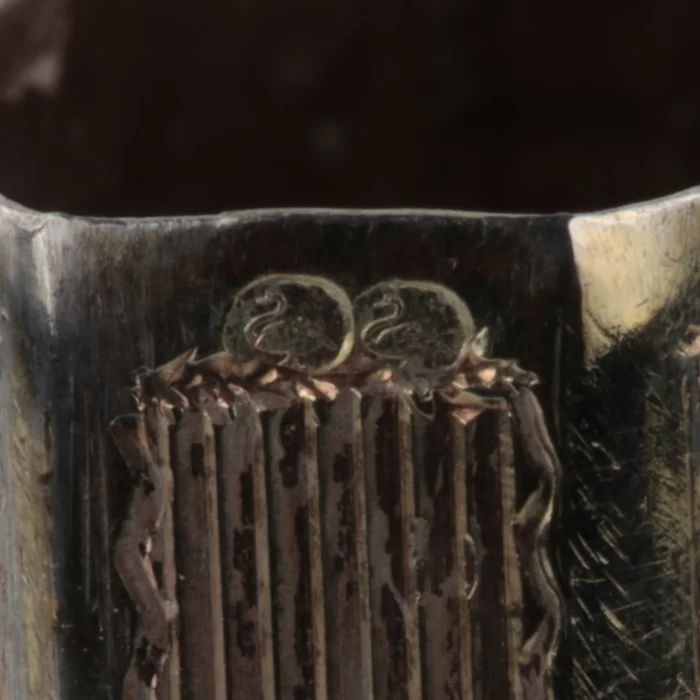
Poinçon français 800 (Cygne dans un ecu ovale) L-12 cm.

Une pièce elegante et astucieusement conçue avec une vignette de passion flamboyante dans le titre.

Destine aux notes personnelles et aux notes. Proche du style Louis XVI.

France 1880.

Poids : 43,19 gr.


Art:
europe
Hauteur:
12 cm
Largeur:
2 cm
Épaisseur:
1.5 cm
Période:
Fin Du 19Ème Siècle
Pays:
France
Matière:
Argent, dorure, Or
État:
Revive
Fair
Good
Very good
Like new

The condition report is provided for informational purposes only.

It is not comprehensive and may not reflect all defects, restorations, alterations, or adaptations, as Antiqon does not perform professional conservation-level assessments. The information is based on a qualified, yet subjective, evaluation by our specialists.Before purchasing, we recommend consultation with an independent expert.Please also consult our Terms and conditions and Glossary A-Z, which contain important information on lot characteristics and sale conditions.
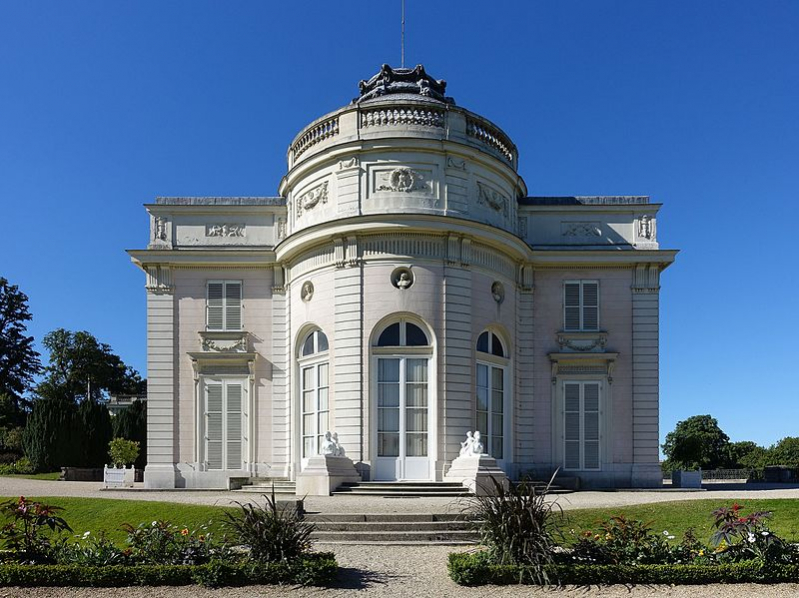
Louis XVI style.
Louis XVI style - the style of architecture, furniture, decorative and applied art of France during the reign of Louis XVI (1774-1793). Includes the finale of the Baroque, and the transition to classicism. It became a kind of reaction to the overload of the Baroque and Rococo. Partly inspired by the discovery of ancient Roman art in Herculaneum and Pompeii. Stylistic norms included a straight column, clear architrave tectonics. He marked the return to nature as an ideal orderly and inherently exemplary model for art. Notable architects and buildings of the period: Victor Louis (1731-1811), who completed the Bordeaux Theater (1780), the Odeon Theater in Paris (1779-1782) was built by Marie-Joseph Peyre (1730-1785). The most characteristic building of the late period is the Hotel de Salme in Paris (now the Palace of the Legion of Honor, built by Pierre Rousseau in 1751-83.Furniture art; high-end tables and cabinets were created for Versailles and other royal residences by cabinetmakers Jean-Henri Risoner and David Roentgen. They used precious wood inlays, in particular mahogany, with gilded bronze and mother-of-pearl ornaments.The Royal Tapestry Manufactories, Aubusson and Beauvais Tapestry continued to make large tapestries, but much of their business began producing upholstery for new sets of chairs, sofas and other furnishings for royal residences and nobles.

Stay up to date with new arrivals
Save Argent Européen and we let you know when new listings appears in this category
Sauvegarder

Related items