VITRINE EN ACAJOU ET BRONZE DORÉ DANS LE GOÛT DE SORMANI FRANCE, FIN DU XIXE SIÈCLE

VITRINE EN ACAJOU ET BRONZE DORÉ DANS LE GOÛT DE SORMANI FRANCE, FIN DU XIXE SIÈCLE

ID-ANTQ-8154
Live auction begins in:
| April 10, 2026 2:40 AM GMT+03:00
Estimé
4000 - 5000 EUR
Current Bid
EUR
 
0 Bids
Register for bidding
Request more info
Use our cost calculator

Discover how the value of similar works has evolved over the past 10 years. Art is not only beauty — it's an investment.

Price History

Discover how the value of similar works has evolved over the past 10 years. Art is not only beauty — it's an investment.

Request a Shipping Quote

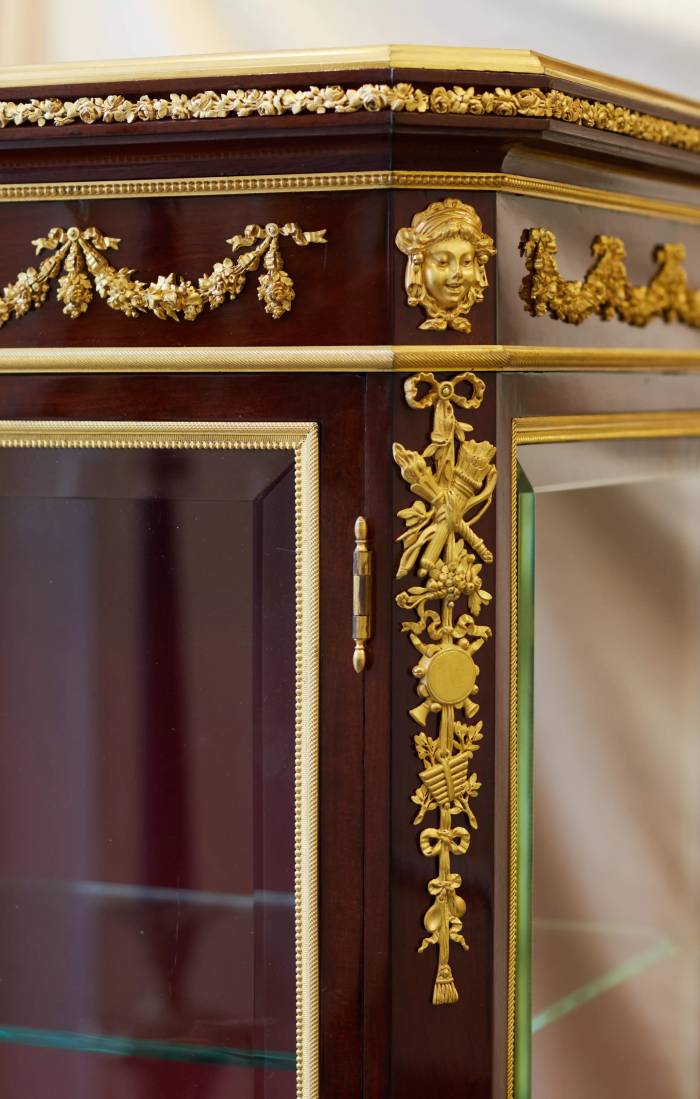
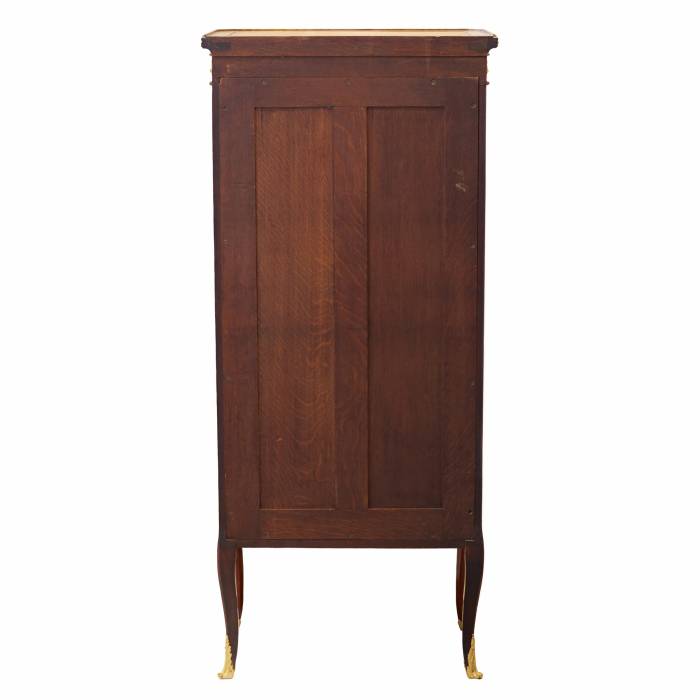
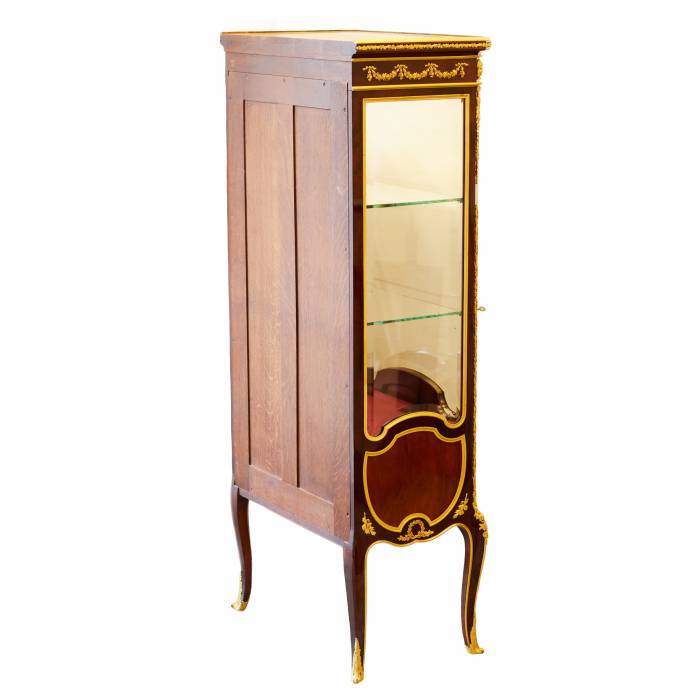
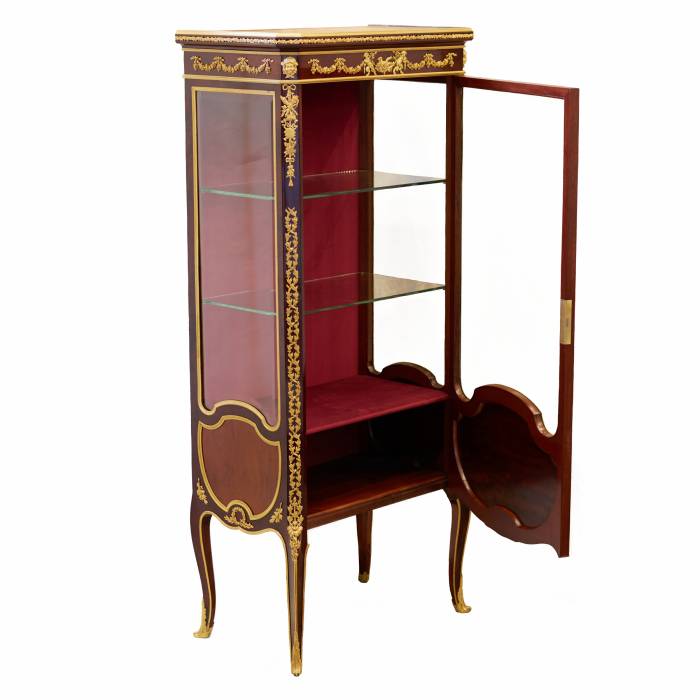
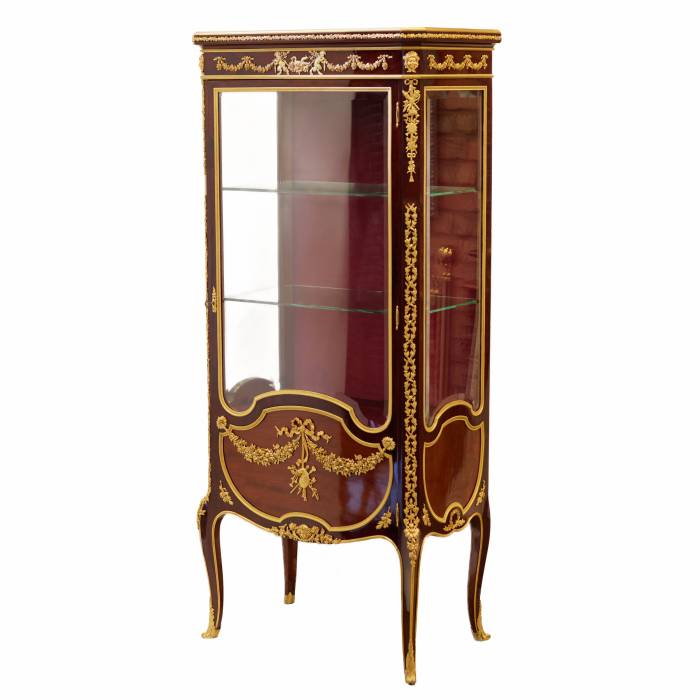
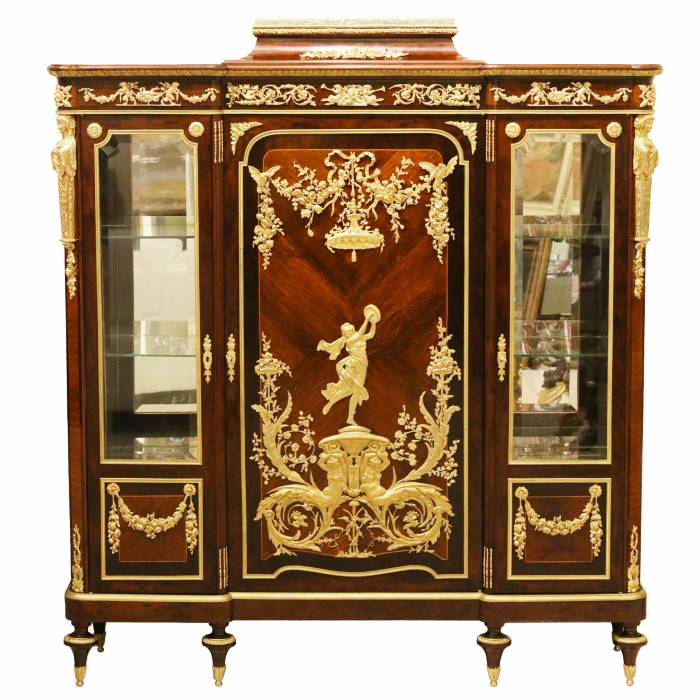
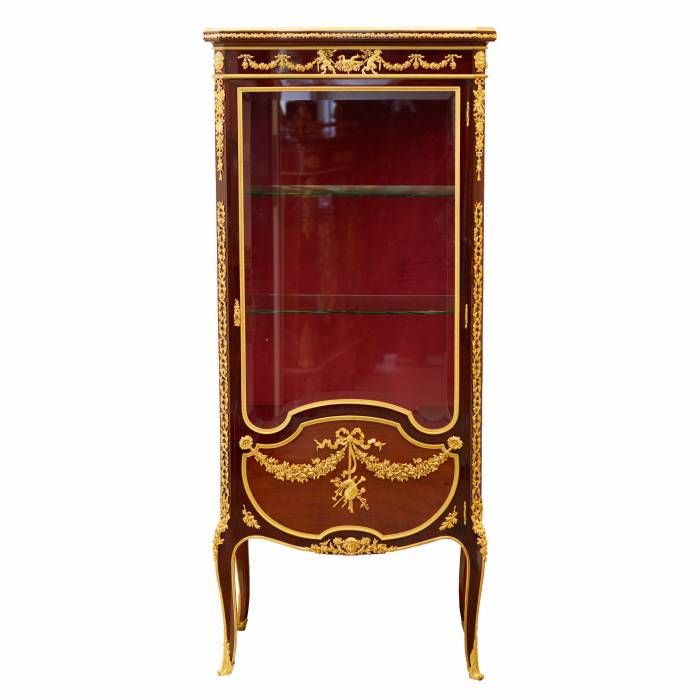
Élégante vitrine à une porte avec serrure, exécutée en acajou et richement ornée de bronzes dorés, elle constitue un remarquable exemple de l’historicisme français de la seconde moitié du XIXe siècle dans l’esprit de l’atelier Sormani. Les proportions élancées du corps rectangulaire à angles chanfreinés témoignent d’une grande harmonie architecturale. L’ensemble repose sur des pieds cabriole élancés agrémentés de sabots en bronze.

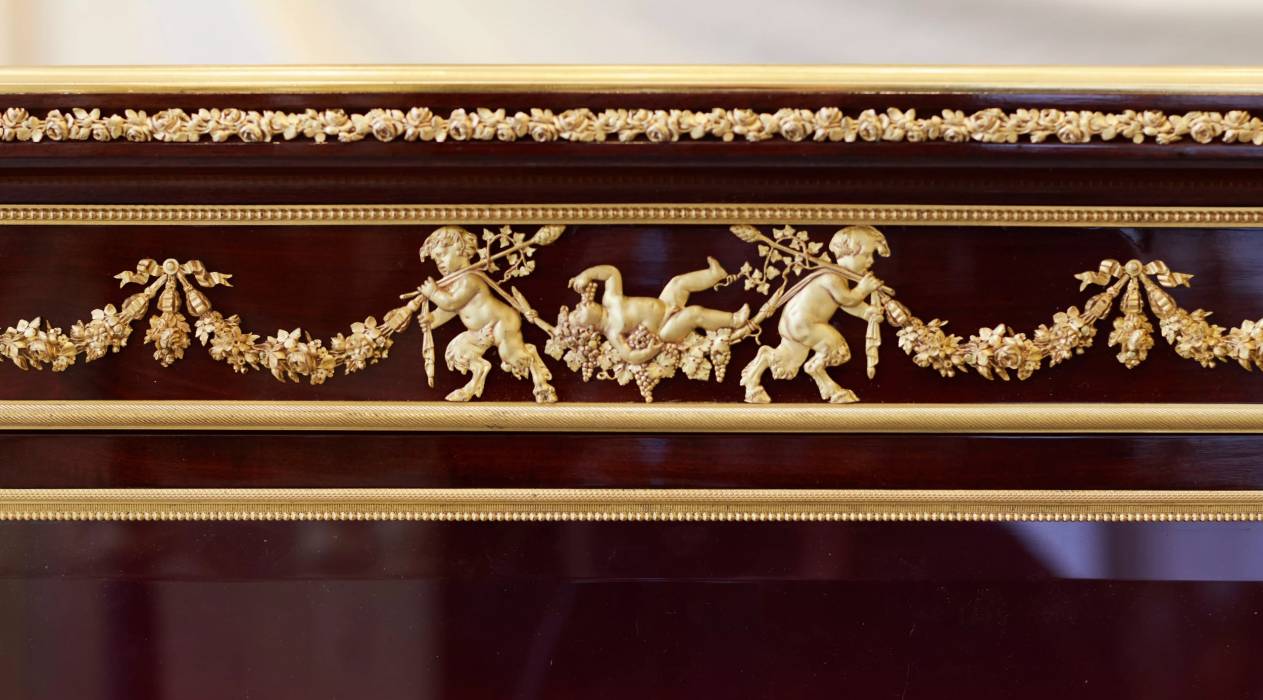
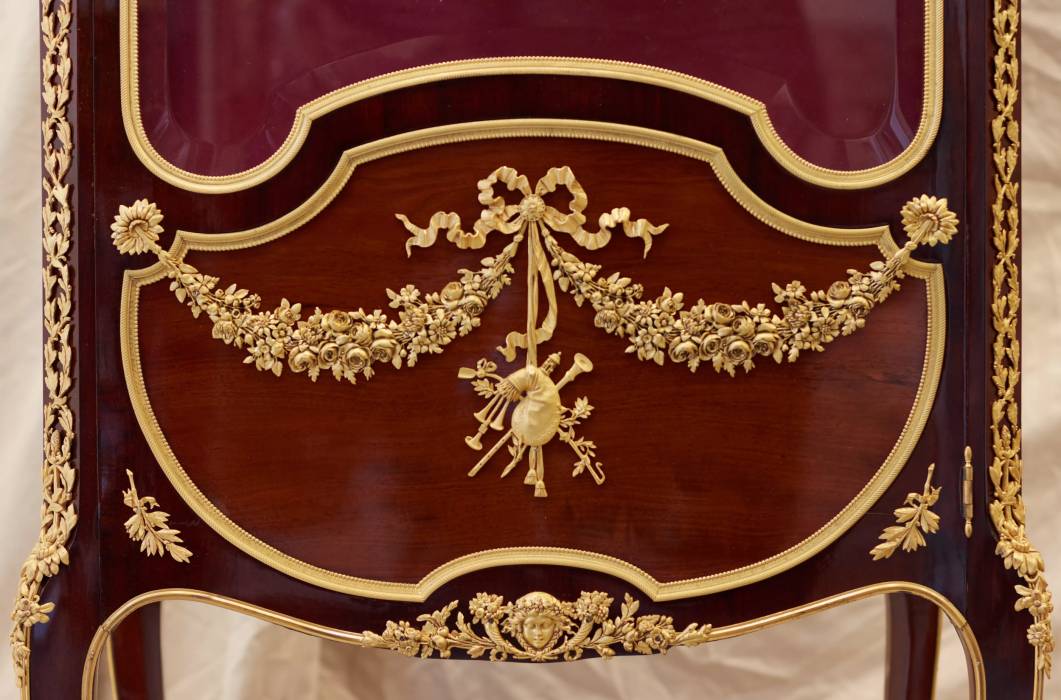
La frise est décorée d’une fine guirlande en bronze ciselé représentant de jeunes satyres portant leur compagnon éméché, conférant à la composition une dynamique ludique évoquant les scènes bachiques du XVIIIe siècle. Les angles sont ornés de couronnes de laurier et de grotesques musicaux. Le panneau central présente de riches guirlandes florales nouées par un ruban, suspendant une cornemuse et des attributs pastoraux. Des mascarons délicats soulignent les points nodaux de la composition.

Le vitrage est biseauté sur trois côtés. L’intérieur est garni de tissu rouge profond et comprend deux étagères en verre. Le plateau est en marbre rose veiné.

Dimensions: 149 × 64,5 × 38,5 cm.
Matériaux: Acajou, bronze doré, verre, marbre rose.
État: Bon. Légères usures de la dorure conformes à l’âge.
Provenance: Collection privée.

Art:
europe
Hauteur:
149 cm
Largeur:
64.5 cm
Épaisseur:
38.5 cm
Période:
Fin Du 19Ème Siècle
Style:
Louis Xvi
Pays:
France
Matière:
Acajou, Bronze Doré
État:
Revive
Fair
Good
Very good
Like new

Le mobilier français de la seconde moitié du XIXe siècle s’inscrit dans le vaste mouvement de l’historicisme qui caractérise l’époque du Second Empire et des décennies qui suivent. Sous Napoléon III, Paris devient le centre incontesté des arts décoratifs européens. Les Expositions universelles de 1855, 1867 et 1878 jouent un rôle déterminant dans la diffusion du goût français et dans l’affirmation d’un luxe fondé sur la virtuosité technique, la richesse des matériaux et la référence érudite aux styles du XVIIIe siècle. Les ateliers parisiens réinterprètent alors les modèles Louis XV et Louis XVI, non comme de simples copies, mais comme des recréations raffinées adaptées aux exigences contemporaines.

Parmi les maisons les plus réputées figure la Maison Sormani, fondée par Paul Sormani, dont la production se distingue par l’excellence de l’ébénisterie, la qualité exceptionnelle des bronzes dorés et le soin apporté aux proportions. Les meubles réalisés dans cet esprit se caractérisent par l’usage de l’acajou finement sélectionné, par des montures en bronze ciselé et doré d’une grande précision, ainsi que par une ornementation inspirée du vocabulaire rococo et néoclassique. Guirlandes florales, couronnes de laurier, mascarons et attributs musicaux traduisent une culture décorative savante, héritée des grands maîtres du XVIIIe siècle.

Les vitrines occupent une place particulière dans l’aménagement des intérieurs bourgeois et aristocratiques de la fin du XIXe siècle. Elles répondent à un nouveau mode de vie où la collection d’objets d’art, de porcelaines, de bronzes ou de curiosités devient un signe distinctif de statut social et de raffinement intellectuel. Dotées de vitrages biseautés et de plateaux en marbre, ces pièces associent fonctionnalité et prestige, transformant le meuble en véritable écrin d’exposition. Aujourd’hui, les vitrines exécutées dans le goût de Sormani sont reconnues comme des témoins majeurs du mobilier de luxe français et occupent une place de choix dans les collections d’arts décoratifs du XIXe siècle.

Bon. L’état correspond à l’âge et à la qualité de la pièce. Légères usures de la dorure. Structure saine sans déformation.

The condition report is provided for informational purposes only.

It is not comprehensive and may not reflect all defects, restorations, alterations, or adaptations, as Antiqon does not perform professional conservation-level assessments. The information is based on a qualified, yet subjective, evaluation by our specialists.Before purchasing, we recommend consultation with an independent expert.Please also consult our Terms and conditions and Glossary A-Z, which contain important information on lot characteristics and sale conditions.
PAUL SORMANI (1817-1877)
Paul Sormani (1817-1877): Unraveling the Legacy of a Master Artisan in Fine Furniture Making Paul Sormani (1817-1877) was a renowned artisan and entrepreneur who made a significant impact on the world of fine furniture making during the 19th century. His name has become synonymous with exquisite craftsmanship and luxury, and his pieces have adorned the homes of nobles, aristocrats, and collectors worldwide. In this article, we will delve into the life and work of Paul Sormani, exploring his contributions to the art of furniture making, the enduring legacy of his creations, and his role in shaping the history of French furniture during the 19th century. Early Life and Beginnings Born in Venice, Italy, in 1817, Paul Sormani displayed an early aptitude for craftsmanship and design. His family background, which included generations of skilled woodworkers, influenced his passion for the art. He honed his skills by studying under renowned Italian craftsmen, acquiring a deep understanding of traditional techniques and design principles. Establishing in Paris In the mid-19th century, Paris was the epicenter of art, culture, and luxury, attracting creative minds from across the globe. In 1847, Paul Sormani decided to move to Paris to explore new opportunities and expand his horizons. With his exceptional skills and artistic vision, he quickly gained recognition among the elite clientele. Sormani′s Style and Influences Paul Sormani was known for blending various artistic influences into his furniture designs. He masterfully combined elements from different periods, including Renaissance, Rococo, and Neoclassical styles. This fusion of influences resulted in unique and timeless pieces that appealed to the eclectic tastes of his wealthy patrons. Royal Patronage and International Recognition Sormani′s reputation flourished when he received a commission from Emperor Napoleon III and Empress Eugénie, leading to a royal warrant in 1855. This distinguished endorsement elevated his status and attracted a broader clientele, both within France and internationally. Sormani showcased his masterpieces at various international exhibitions, garnering critical acclaim and prestigious awards. Sormani′s Workshop and Collaborations The success of Sormani′s workshop can be attributed to his ability to gather a team of skilled craftsmen and artisans who shared his passion for perfection. Collaborating with notable artists, metalworkers, and decorators, Sormani′s workshop produced exceptional furniture pieces with intricate marquetry, elegant inlays, and lavish ornamentations. Mastering the Art of MarquetryOne of Sormani′s most outstanding skills was the art of marquetry, a technique involving the intricate arrangement of wood veneers to create decorative patterns and designs. His marquetry work was unrivaled, and he often incorporated exotic woods and precious materials, such as mother-of-pearl and tortoiseshell, to enhance the opulence of his pieces. The Decline and Legacy Tragically, Paul Sormani′s life came to an end in 1877, leaving behind a legacy of remarkable furniture designs and unparalleled craftsmanship. His workshop continued to operate for several years, maintaining the high standards set by its founder. However, with changing times and tastes, the demand for such opulent pieces waned, and the workshop eventually closed its doors. Collecting Sormani′s Furniture Today In the present day, Paul Sormani′s furniture remains highly coveted by collectors, museums, and connoisseurs of fine art. Original Sormani pieces can fetch significant sums at auctions, with some reaching astronomical prices. The timeless beauty and historical significance of his works continue to captivate audiences worldwide.

Stay up to date with new arrivals
Save Vitrines and we let you know when new listings appears in this category
Sauvegarder

Related items