
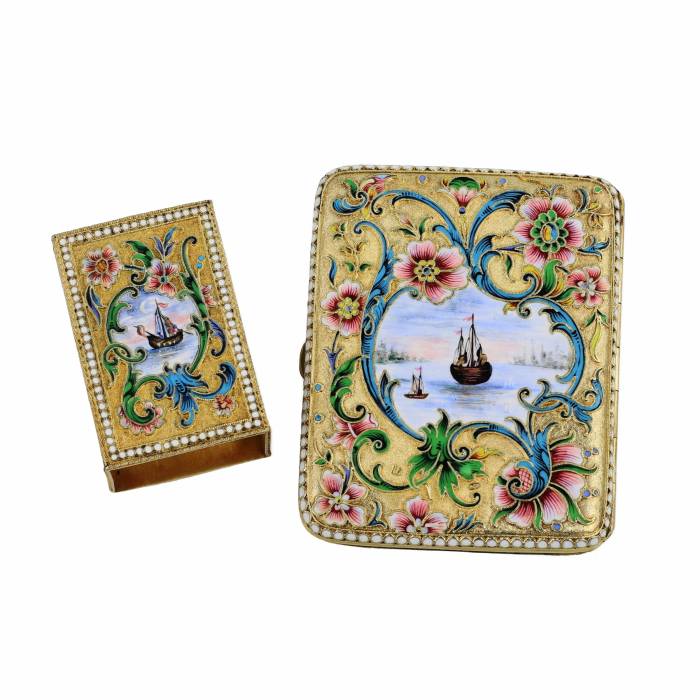
ÉTUI À CIGARETTES ET BOÎTE DALLUMETTES EN ARGENT AVEC ÉMAIL CLOISONNÉ. MOSCOU, MAÎTRE V. AKIMOV, 1899–1908

ÉTUI À CIGARETTES ET BOÎTE DALLUMETTES EN ARGENT AVEC ÉMAIL CLOISONNÉ. MOSCOU, MAÎTRE V. AKIMOV, 1899–1908

ID-ANTQ-12284
November 29, 2025 12:00 PM GMT+02:00
Live auction is finished
Estimé
3000 - 5000 EUR
Lot Sold
 
Lot sold
Use our cost calculator

Discover how the value of similar works has evolved over the past 10 years. Art is not only beauty — it's an investment.

Price History

Discover how the value of similar works has evolved over the past 10 years. Art is not only beauty — it's an investment.

Request a Shipping Quote
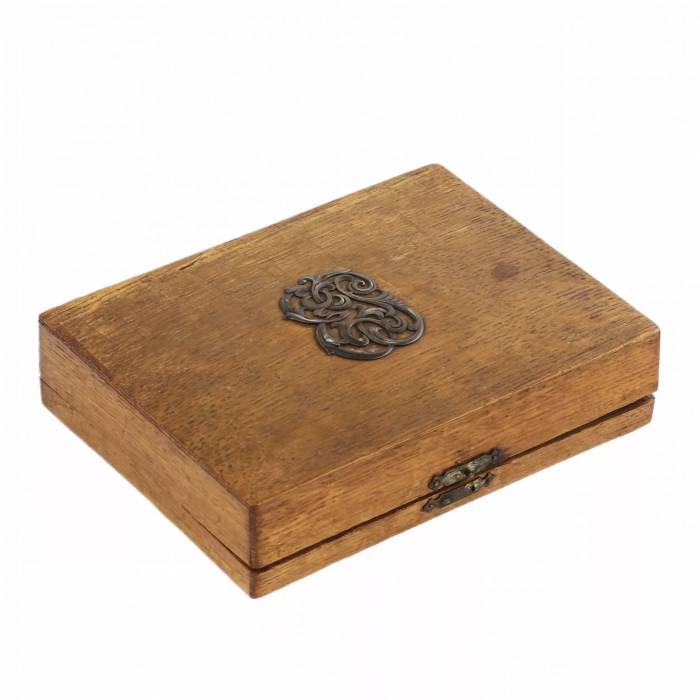
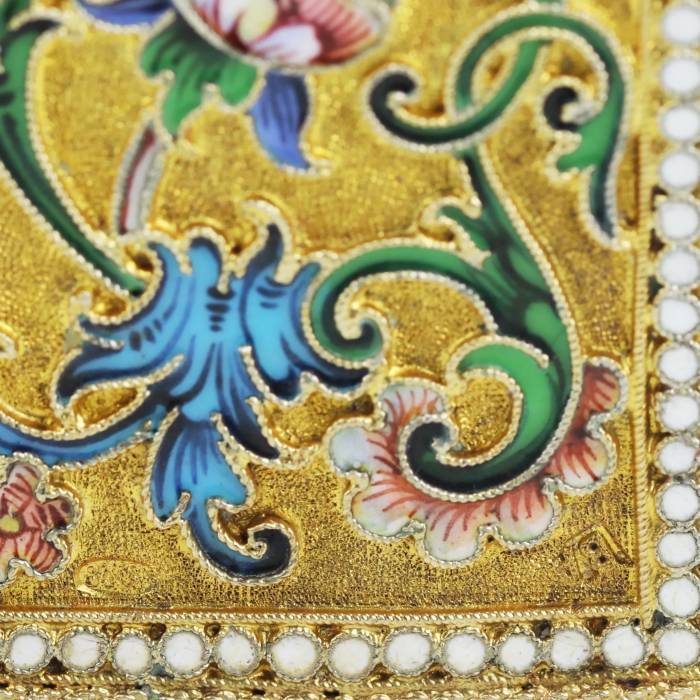
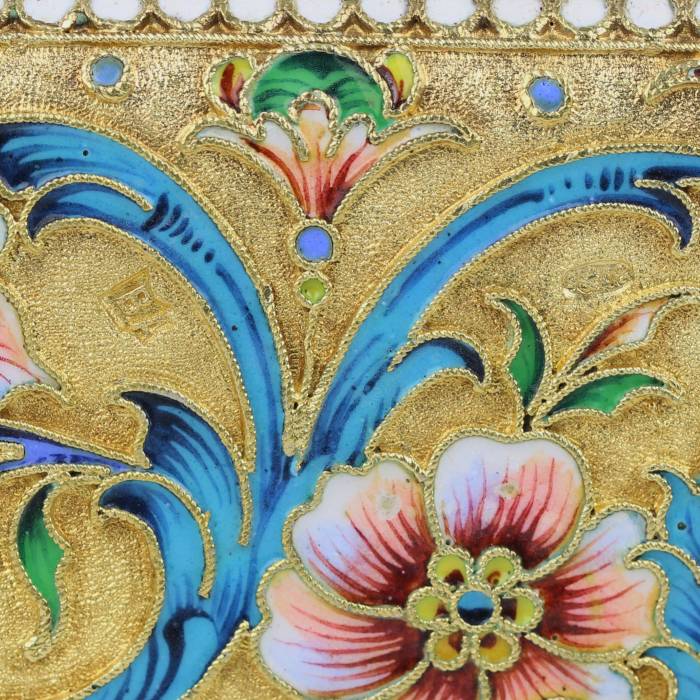
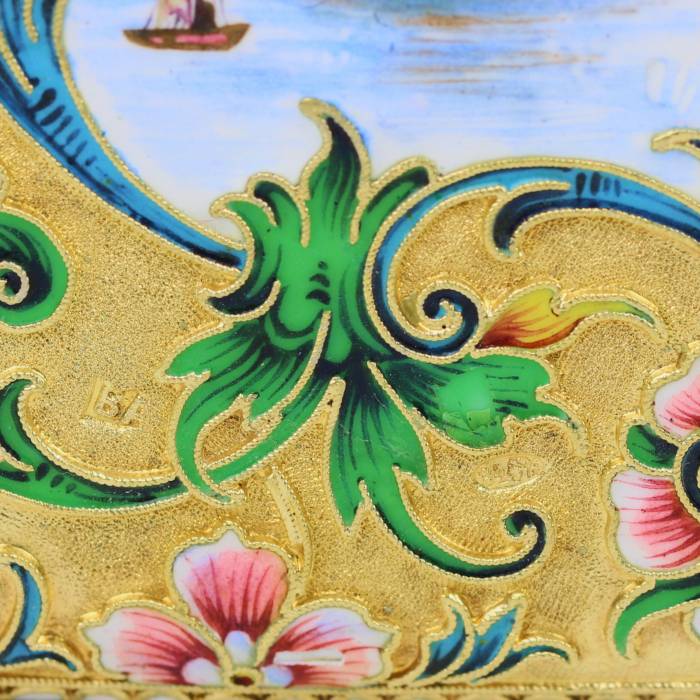
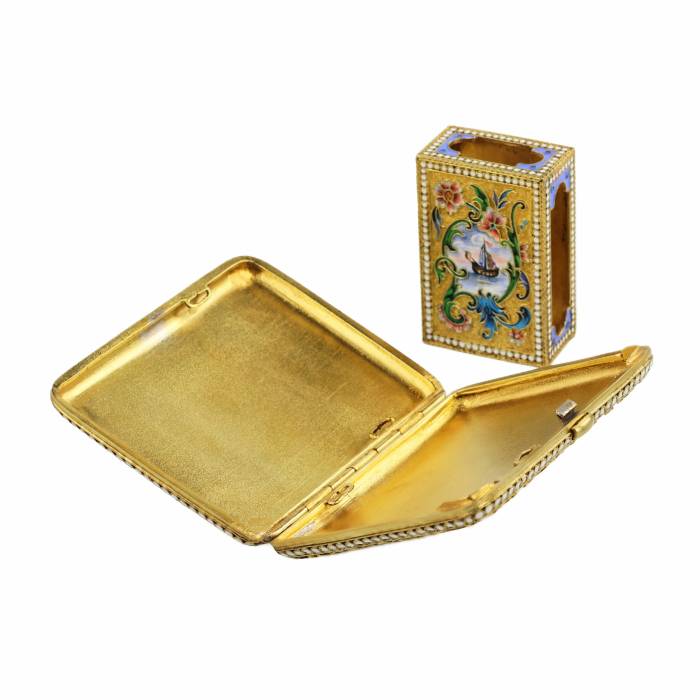
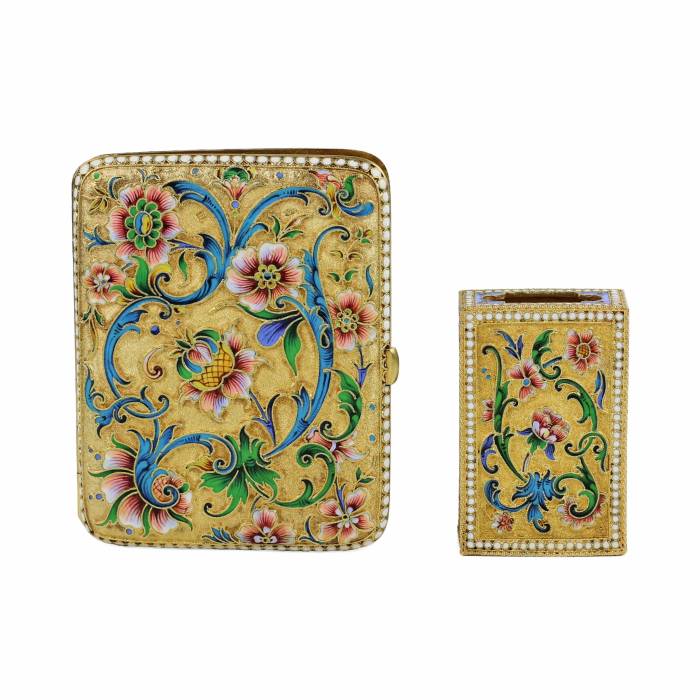
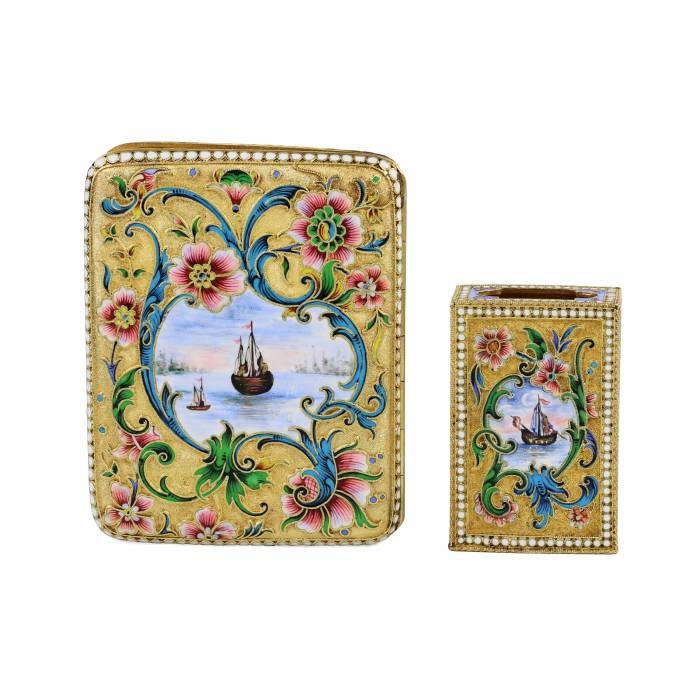
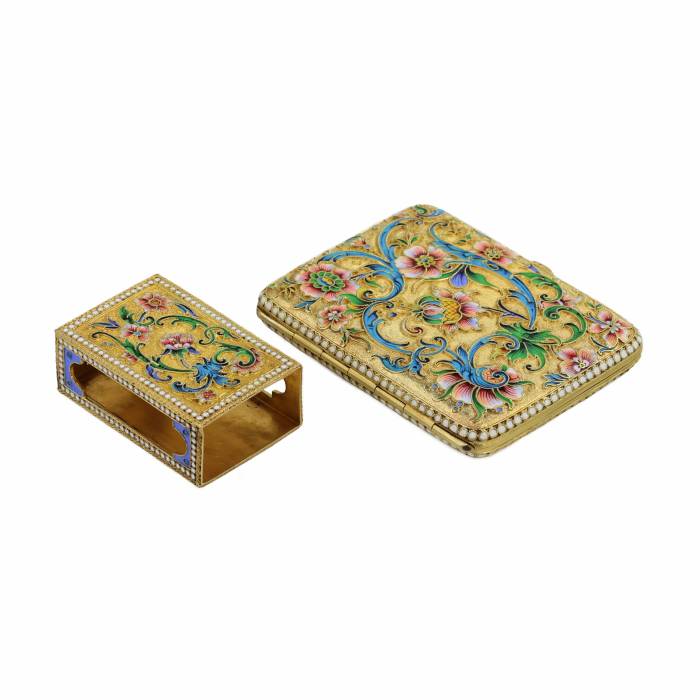
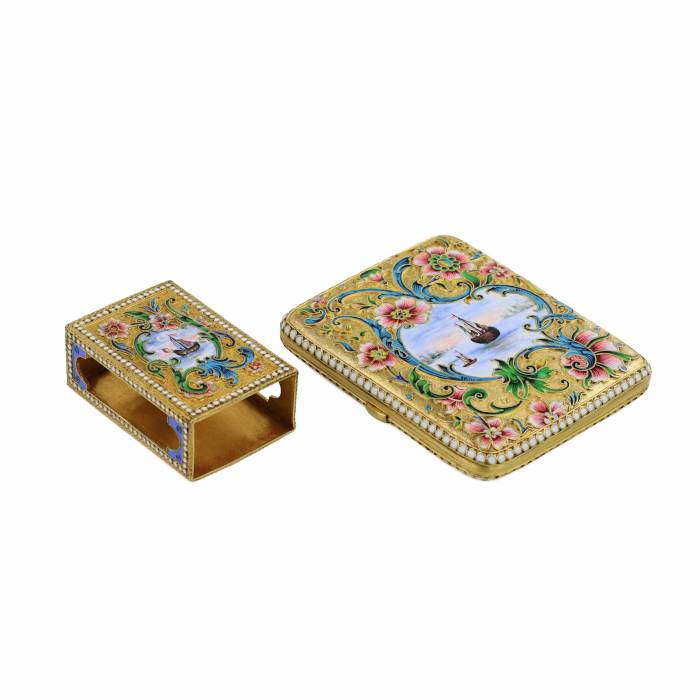
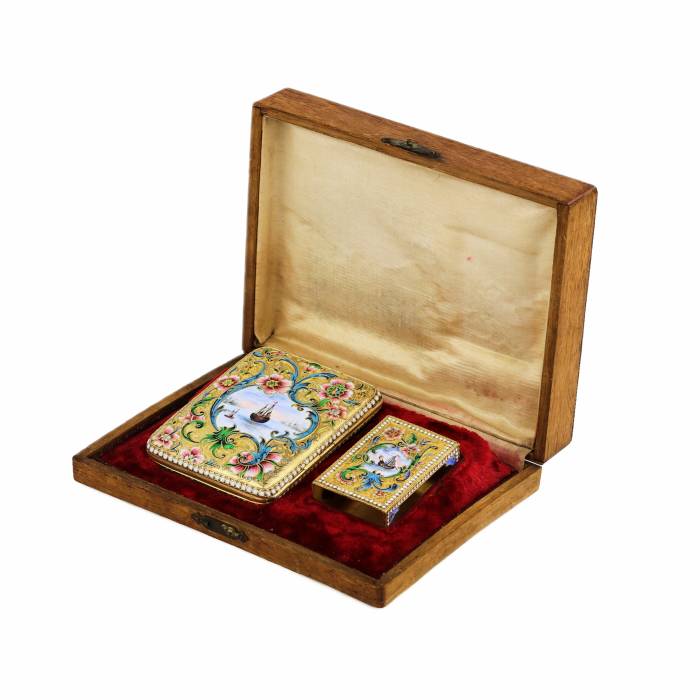
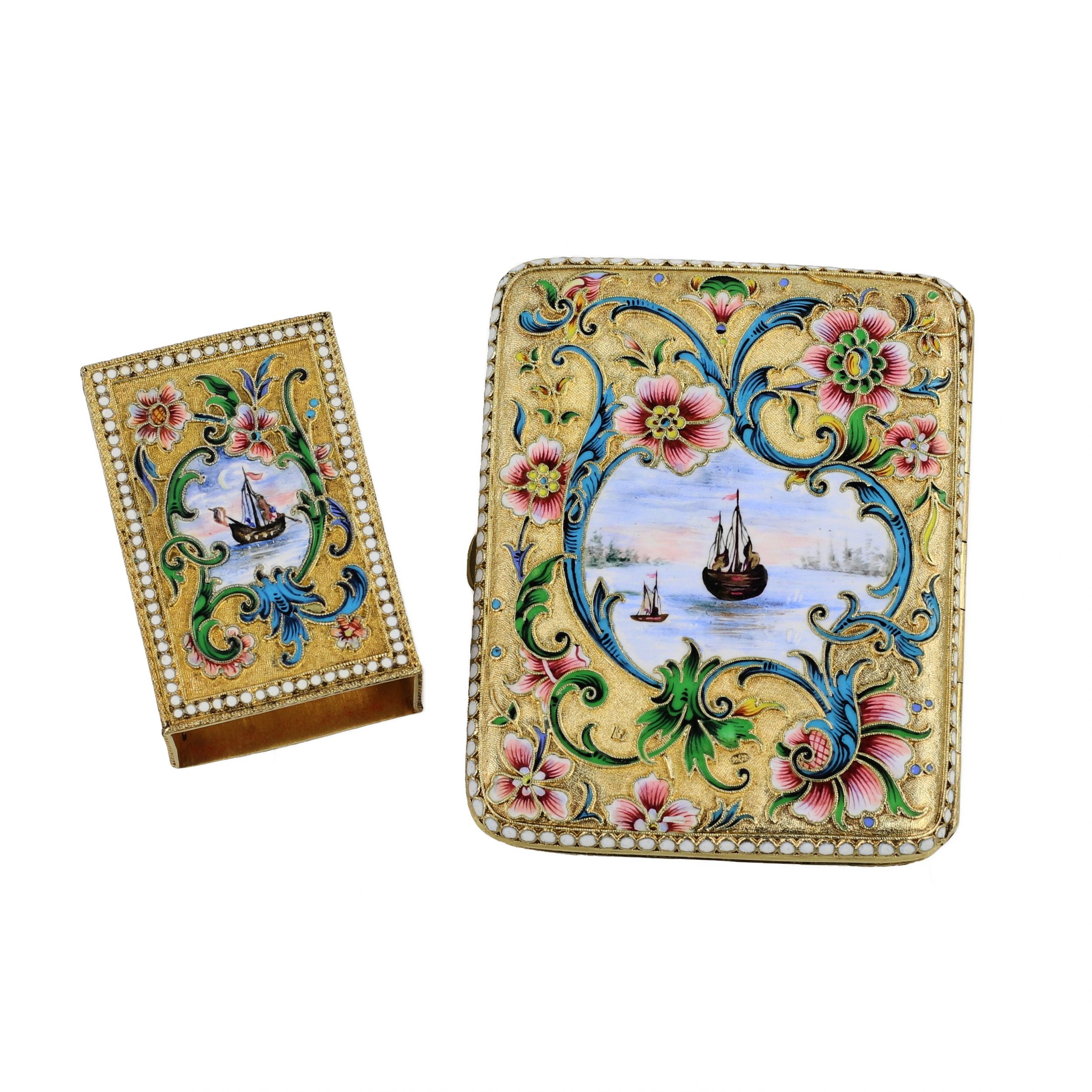
Raffiné étui à cigarettes en argent et sa boîte dallumettes, réalisés à la charnière des XIXe et XXe siècles dans latelier moscovite de Vladimir Akimov. Ornés d’un riche décor d’émail cloisonné sur fond doré, ces objets présentent des guirlandes florales et des enroulements dacanthe peints avec finesse dans des tons pastel. Des cartouches centraux illustrent des scènes maritimes avec voiliers, apportant une touche romantique et témoignant du goût aristocratique de l’époque. Un encadrement de perles en émail blanc accentue le relief et lélégance de la composition. Présenté dans son coffret dorigine en bois garni de velours rouge.

Poinçons :Poinçon du bureau de contrôle de Moscou (1899–1908) représentant une tête féminine en kokoshnik tournée vers la gauche, dans un cartouche ovale, accompagné des initiales de l’inspecteur Ivan Lebedkine et du chiffre 84 (titre d’argent). Poinçon de maître « VA » attribué à Vladimir Nikititch Akimov.

Dimensions :Étui : 9 × 7,5 × 1,5 cmBoîte d’allumettes : 6 × 4 × 2 cm

Poids :Poids brut total : 259 g(étui – 190 g ; boîte – 69 g)

État :Très bon état de collection. Émail et dorure bien conservés, aucun manque notable. Coffret dorigine avec légères marques du temps.

Provenance :Collection privée. Vente : Sotheby’s Olympia, « Tableaux, objets dart et icônes russes », 20 mai 2005, lot 28.

Art:
russia
Hauteur:
4 cm
Largeur:
18 cm
Épaisseur:
14 cm
Période:
Au Tournant Du Siècle 19-20
Style:
Romantisme
Pays:
Russie, Moscou
Matière:
Argent 84, Émail Cloisonné, Dorure
État:
Revive
Fair
Good
Very good
Like new
À la fin du XIXe siècle et au début du XXe, les objets dart raffinés destinés à l’usage quotidien de l’aristocratie et de la bourgeoisie aisée connaissent une large diffusion dans l’Empire russe. Les étuis à cigarettes et boîtes d’allumettes en argent décorés d’émail cloisonné y occupent une place particulière. Cette technique, perfectionnée à Moscou, devient emblématique du haut artisanat russe.

Le maître orfèvre Vladimir Akimov est l’un des représentants éminents de l’école moscovite de l’émail. Dès 1860, son atelier comptait 10 compagnons et 5 apprentis, signe de son ampleur et de son succès.

Les scènes maritimes décorant les cartouches évoquent le voyage, l’aventure, et les rêveries romantiques typiques de l’époque. La palette douce et les rehauts dorés transparents créent un éclat vibrant et précieux.De tels objets, souvent destinés à être offerts ou exposés, étaient aussi présentés dans des salons d’apparat ou lors d’expositions internationales.

Très bon état de conservation. L’émail est intact, la dorure lumineuse, coffret d’origine avec traces minimes liées à l’âge.

The condition report is provided for informational purposes only.

It is not comprehensive and may not reflect all defects, restorations, alterations, or adaptations, as Antiqon does not perform professional conservation-level assessments. The information is based on a qualified, yet subjective, evaluation by our specialists.Before purchasing, we recommend consultation with an independent expert.Please also consult our Terms and conditions and Glossary A-Z, which contain important information on lot characteristics and sale conditions.
Workshop of Vladimir Akimov (since 1860 – early 20th century)
The name of Vladimir Akimov holds an honorable place among the silversmiths and enamellers of the second half of the 19th century. By 1860, his Moscow-based workshop already employed 10 journeymen and 5 apprentices, indicating a stable production structure and high demand for its output. He represented the Moscow school, known for its richness of decorative techniques, vibrant color palettes, and strong technical execution. His workshop produced both religious and secular items: icon covers, snuffboxes, caskets, cups, and presentation dishes crafted using techniques such as chasing, filigree, niello, and, notably, cloisonné enamel on silver. Akimov′s workshop embraced the Neo-Russian and Neo-Byzantine styles, aligning with the tastes of the nobility and wealthy merchant class during the reigns of Alexander II and Alexander III. He not only developed the traditions of early 19th-century Moscow silversmiths but also adapted them to the shifting aesthetic trends of the period. Among Akimov’s most valued contributions was his use of cloisonné and multicolored enamel. The workshop created pieces that met the high standards of the artistic market, serving both liturgical and export needs, especially in response to European demand for objects in the “Russian style.” Judging by surviving hallmarks, Akimov’s products bore the master’s initials “ВА” (in Cyrillic or Latin) alongside the official Moscow assay marks. The earliest known pieces date to the 1860s, featuring relatively restrained ornamentation compared to the more elaborate items of the 1880s–1890s. Possible cooperation with other Moscow suppliers and larger firms—such as Fabergé—is plausible, though not confirmed by documents. Akimov’s creations are preserved in various museum and private collections. Especially prized are items that combine fine enamel work with religious or folk themes, as well as luxurious secular objects distinguished by elegant form and ornamental sophistication. Their artistic expression allows Vladimir Akimov’s output to stand as a worthy counterpart to that of St. Petersburg masters, who were generally more oriented toward Western European aesthetics. Today, Akimov’s works are highly valued on the antiques market, especially among collectors of 19th-century Russian silver and enamel. Their defining features—vivid enamel palettes, cloisonné virtuosity, and refined form—make them instantly recognizable and in high demand.
... Read More

Stay up to date with new arrivals
Save Argent Russe and we let you know when new listings appears in this category
Sauvegarder

Related items