Price:
12500 €
Add to cart

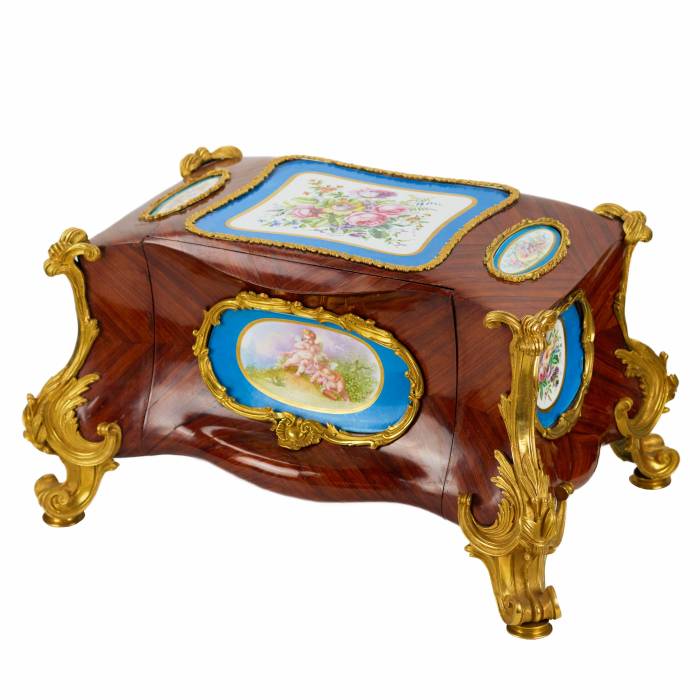
Manufacture nationale de Sèvres is the French state porcelain manufactory, founded in the eighteenth century and recognised as one of Europe’s principal centres of artistic porcelain. Operating under royal and later imperial patronage, it established enduring standards of quality, pictorial decoration and technical innovation in the field of decorative arts.
We will only share latest what our month on the MANUFACTURE NATIONALE DE SÈVRES.
HISTORY AND DEVELOPMENT
The manufactory was founded in 1740 in Vincennes under the name Manufacture de Vincennes and transferred in 1756 to Sèvres, in close proximity to Versailles, under the patronage of King Louis XV. During the eighteenth century it developed as a royal manufactory dedicated to the production of porcelain of the highest artistic level for court use and diplomatic gifts.
Following the French Revolution, the manufactory was nationalised and in the nineteenth century acquired the status of a state institution. During this period, Manufacture nationale de Sèvres became a centre for artistic and technical experimentation, combining Rococo and Neoclassical traditions with the aesthetics of Empire and Historicism. In the twentieth and twenty-first centuries, the manufactory has retained its role as France’s leading state centre for artistic porcelain, producing both historical models and contemporary artistic works.
TITLES, DISTINCTIONS AND COMMISSIONS
The Sèvres manufactory served as an official supplier to the French royal court and later to the imperial court of Napoleon I, as well as to state institutions. Its works were regularly exhibited at major international exhibitions of the nineteenth and twentieth centuries, where they received the highest distinctions. Sèvres porcelain was widely used for diplomatic gifts, palace interiors and state residences.
ARTISTIC SPECIFICITY AND TECHNIQUES
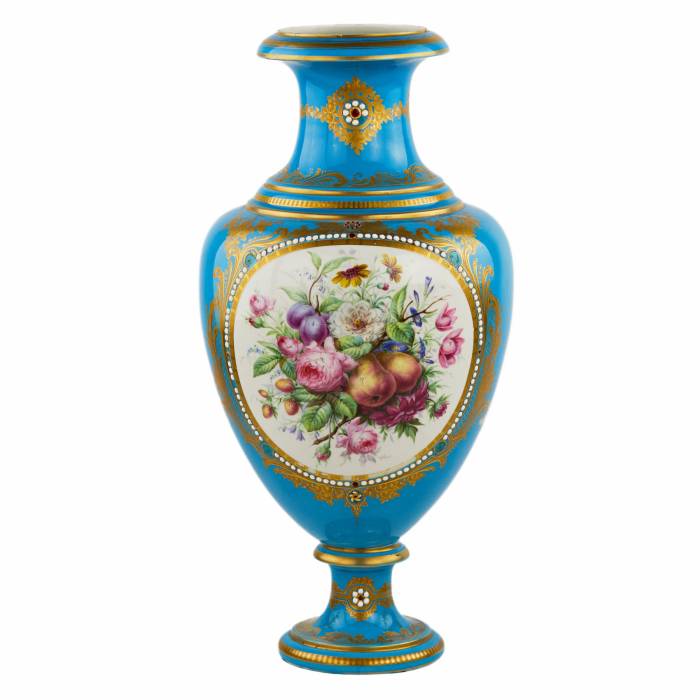
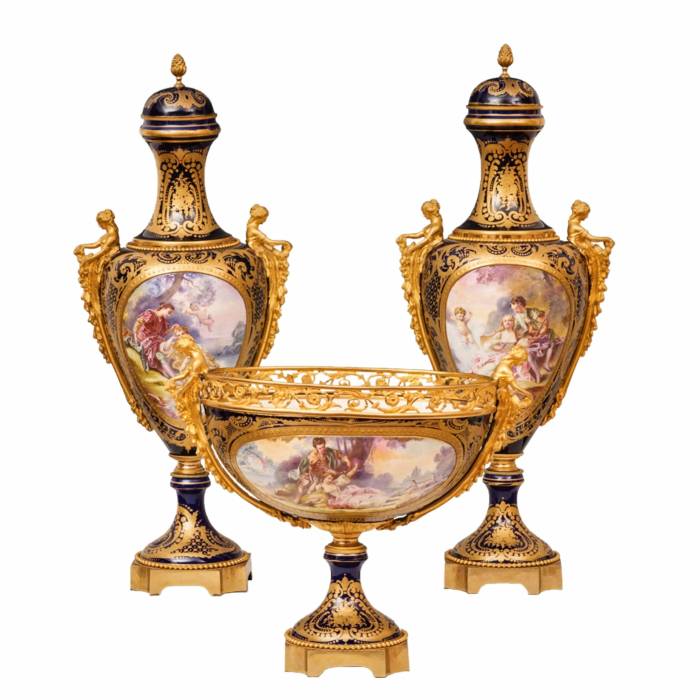
The manufactory is renowned for the development of distinctive porcelain bodies, including soft-paste porcelain and later hard-paste porcelain, as well as complex underglaze and overglaze decorative techniques. Characteristic features include deep cobalt-blue grounds, elaborate gilded ornamentation and painted medallions depicting gallant, mythological and historical scenes. During the nineteenth century, highly refined polychrome painting developed, bringing porcelain decoration closer in effect to easel painting.
LEGACY AND MASTERPIECES
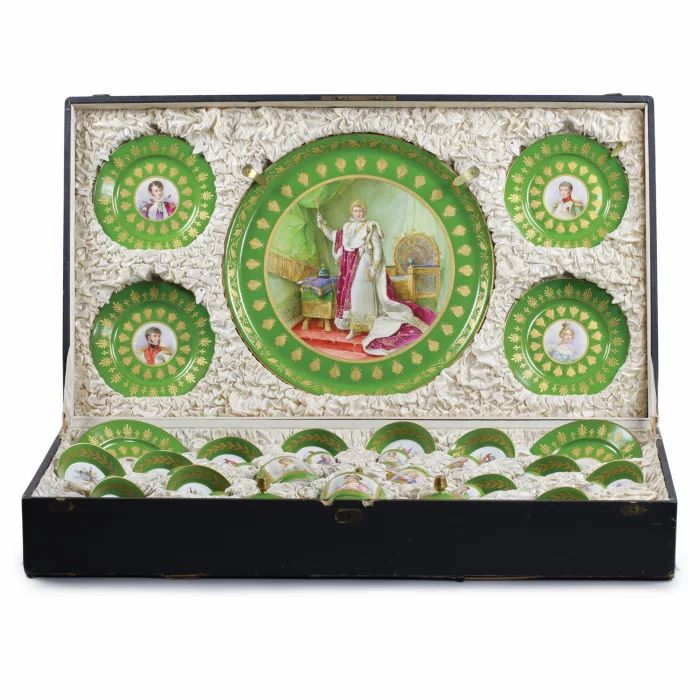
Among the manufactory’s benchmark works are ceremonial vases of the reigns of Louis XV and Louis XVI, imperial services from the period of Napoleon I, and monumental decorative vases from the first half of the nineteenth century featuring historical and allegorical compositions. Works by Manufacture nationale de Sèvres are preserved in the collections of the Louvre, Versailles, the Metropolitan Museum of Art, the British Museum and other major international institutions.
MARKET ANALYSIS
Exceptional works: Ceremonial vases, monumental vases and garnitures of museum quality, produced for royal and imperial commissions or official state programmes, occupy the upper segment of the market. For works with confirmed attribution, early dating and well-preserved decoration, the indicative price range is €400,000–2,000,000, with higher results possible for pieces of exceptional rarity and condition.
Rare works: Authorial vases, paired compositions and nineteenth-century services with pictorial scenes and complex gilded decoration demonstrate stable and competitive demand from private collectors and institutions. A realistic market range is €80,000–450,000, depending on scale, quality of painting, condition and documented provenance.
Series works: Later and serial productions of the manufactory, executed to a consistently high technical and artistic standard but without a unique commission context, are represented in a more accessible market segment. Typical prices range from €8,000–70,000, with variation according to period of manufacture, condition and decorative quality.