Price:
7500 €
Add to cart

Charles Léandre - a French painter, caricaturist and illustrator of the Belle Époque, recognised as one of the notable masters of satirical graphic art in France at the end of the 19th and beginning of the 20th century. His drawings, magazine illustrations and theatre posters became part of the visual culture of Paris during this period.
We will only share latest what our month on the CHARLES LÉANDRE.
BIOGRAPHY
Charles Léandre was born in 1862 in Champsecret, in the Orne department, France. He received his artistic education in Paris where he studied under Gabriel Ferrier. From an early stage the artist showed a strong interest in caricature and journal illustration.
From the late 1880s Léandre collaborated with several French satirical magazines, including Le Rire, Le Figaro illustré and L’Assiette au beurre. His drawings were regularly published in the Parisian press and gained wide recognition.
During the 1890s the artist also became known for theatre and cabaret posters produced in Paris. His works were exhibited at artistic salons and exhibitions, and he was awarded the Legion of Honour.
Charles Léandre died in France in 1934, leaving an important body of graphic work.
CAREER STAGES
Léandre’s early career was closely connected with magazine illustration of the late 1880s. During this period he developed his characteristic style of caricature based on expressive line and precise observation of character.
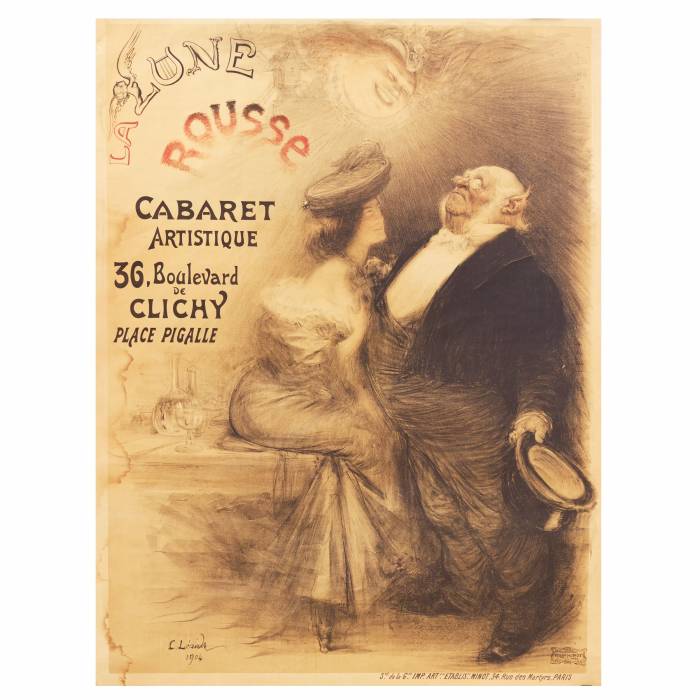
In the 1890s he became a prominent figure of French satirical graphics. His caricatures appeared in leading Parisian journals. At the same time Léandre created a number of posters for theatres and cabarets, including the well known posters for La Lune Rousse.
In the early 20th century he continued to work as a caricaturist and illustrator, addressing themes connected with French social and cultural life.
STYLE, TECHNIQUE AND ARTISTIC VISION
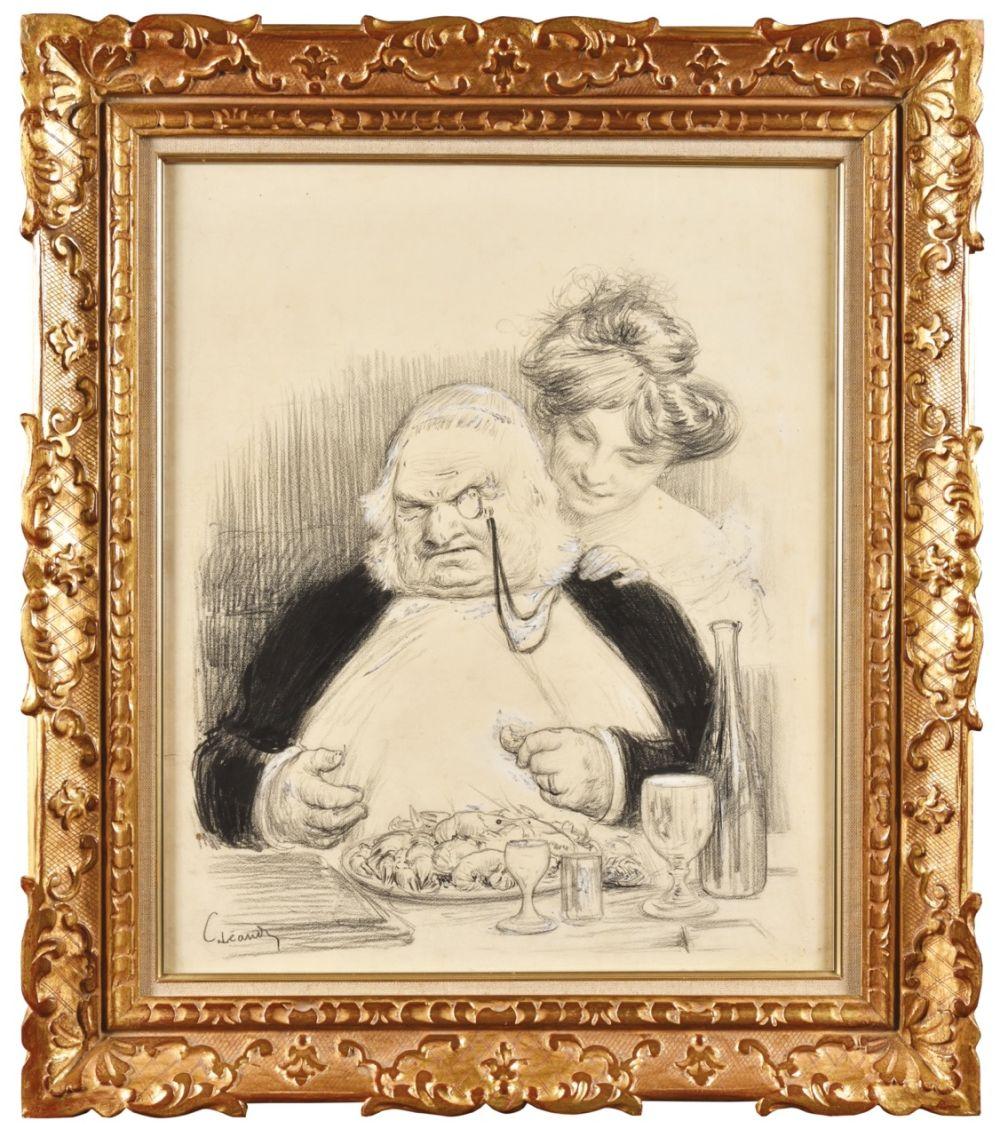
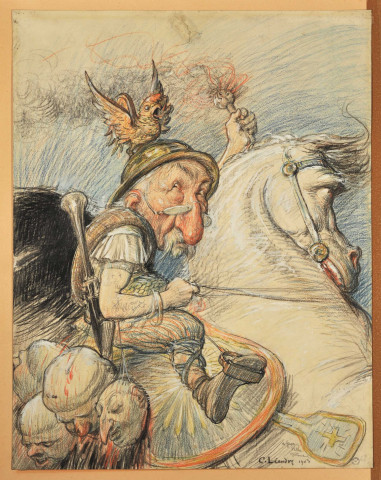
The work of Charles Léandre belongs to the tradition of French caricature and graphic art of the Belle Époque. His artistic language is based on free linear drawing, expressive modelling of figures and the precise depiction of character.
He widely used lithography, ink drawing and gouache, allowing him to produce both magazine illustrations and large format theatrical posters. His works combine elements of observational realism with grotesque exaggeration typical of political and social satire.
LEGACY AND MASTERPIECES
Works by Charles Léandre are held in museum and private collections dedicated to European graphic art and poster history.
Among his best known works are:
the series of caricatures for the magazine Le Rire, 1890s
the poster for the cabaret La Lune Rousse, Paris, circa 1895
illustrations for Le Figaro illustré, early 20th century
theatre posters created for Parisian stages during the Belle Époque.